

Do You Need a Visa for a Layover?

It depends on one thing, which is whether the connection forces you to pass through immigration at all. If it keeps you inside the international transit area, many nationalities need nothing beyond an onward boarding pass. If the country makes you clear immigration in order to connect, then you need whatever that country requires of any ordinary visitor arriving to stay.
The United States is the case that catches people out, because it has no airside transit at all. Everyone connecting through a US airport clears immigration and customs, collects their checked bags and re-checks them for the onward leg, which means a US connection needs full entry authorisation even if you never leave the terminal.
The Question to Ask Instead
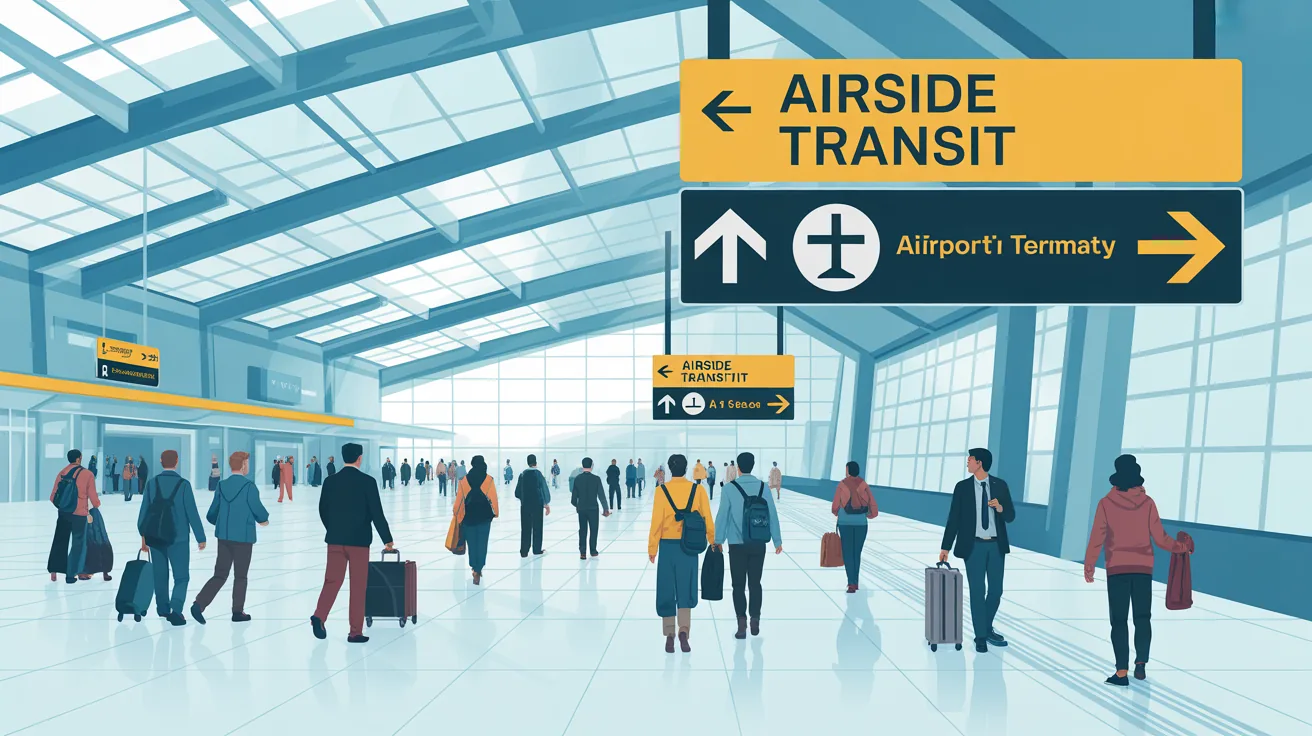
Rather than asking whether you need a visa for a layover, it helps to ask two narrower questions instead: whether the airport permits airside transit for your nationality, and whether your particular booking actually keeps you airside.
Two separate things force you landside even at airports where airside transit is otherwise available. Separate tickets rather than a single booking mean you collect your luggage and check in again from scratch, which in almost every case requires formally entering the country first. Changing airports within the same city does the same thing, and so does an overnight connection at an airport with no airside accommodation available.
| Situation | Do you clear immigration? |
|---|---|
| Single booking, same airport, airside transit permitted | Usually no |
| Connecting through the United States | Always yes |
| Separate tickets with checked bags | Yes, to collect and re-check |
| Changing airports in one city | Yes |
| Leaving the airport to see the city | Yes |
| Overnight with no airside hotel | Usually yes |
How the Main Regions Handle It

The patterns below are general and every one of them has nationality specific exceptions, which is exactly why the lookup matters more than the summary.
The Schengen area permits airport transit without entering for most nationalities, though a specific published list of nationalities requires an Airport Transit Visa even to remain airside throughout. If you do enter rather than staying airside, you are now registered biometrically on that first arrival, and the EU has published how its Entry/Exit system operates, which has lengthened arrival processing at many airports.
The United Kingdom operates a Direct Airside Transit Visa for some nationalities and a separate landside transit requirement for others, so the answer there depends far more on your passport than on your itinerary or your booking. Parliamentary briefings cover the UK’s electronic travel authorisation alongside these, and that authorisation now applies to a wide range of travellers including some who are only connecting through a UK airport rather than visiting.
The United States is the outlier and the expensive mistake. There is no international transit area at a US airport in the sense other countries use the term. A passenger flying London to Mexico City via Dallas is legally entering the United States at Dallas, with everything that implies. Because there is no airside transit, a connection through a US airport requires the same authorisation as a visit, whether that is a visa or the electronic authorisation available to eligible nationalities. US border programmes are administered by Customs and Border Protection.
⚠️ Common Mistake to Avoid
The costly assumption is that not leaving the airport means not entering the country. For the United States that is simply wrong, and travellers are refused boarding at their origin airport rather than discovering the problem on arrival, because the airline is liable for carrying someone who will be refused entry. The same applies in reverse: people who assume they need a transit visa somewhere that permits airside transit sometimes buy one unnecessarily. Both errors come from guessing at a general rule rather than checking the specific one that applies to a specific passport on a specific route.
Transit Schemes That Work in Your Favour
Some countries actively encourage stopovers. Their national carriers benefit from a connecting hub, and the transit rules reflect that commercial interest rather than pure border policy. China operates a visa free transit scheme that has been repeatedly expanded over the past two years and now allows eligible nationalities a stay measured in days rather than hours at a long list of designated ports of entry, provided the onward journey continues to a third country rather than returning to wherever you came from. That third country condition is the one that disqualifies most people who assume they qualify.
Several other countries run comparable schemes with shorter windows, usually tied to specific airports and specific onward routings.
It is not automatic. You request it at immigration on arrival, and you must meet every condition attached to it. Several Gulf and Asian carriers also run stopover programmes that pair a transit visa with discounted or included accommodation for a night or two, which turns a long connection into an extra stop rather than dead time.
💡 Pro Tip
Check three sources and treat them in order. The country’s own immigration authority is definitive and nothing overrides it. Your airline’s travel requirements tool is the practical one, because the airline is what actually stops you at the gate, and it maintains that data precisely because it carries the liability. Third party summaries, including this one, are for orientation only and should never be the last thing you check. The rules are specific to your passport, your route and sometimes even your onward ticket, and they change without a great deal of warning.
Practical Points for the Booking Itself
Book connections on a single ticket wherever the price difference is reasonable. It is the single most protective booking decision available to you. It keeps you airside wherever that is possible at all, it puts the airline on the hook if the first leg runs late and you miss the second one, and it removes the baggage collection step that forces you landside.
Minimum connection times published by airports assume everything runs normally and that you stay airside. They are a floor rather than a recommendation.
Allow considerably more than the published minimum connection time if you know you will clear immigration, because the queue rather than the walk between gates is now the variable, and it is the one you cannot control. That planning belongs with the decisions you make when choosing the flight rather than afterwards, and a little preparation before departure avoids most of it.
Transit and visa rules are nationality specific and change frequently. This article describes general patterns only. Check the official immigration authority for every country on your route, and your airline, before you book.
Final Thoughts
The reason this question is asked so often is that the answer feels as though it ought to be universal, and it is not. There is no general rule about layovers, only a set of country rules that happen to overlap, and the one thing worth memorising is that the United States has no transit exception. Everything else is a lookup rather than a principle, which is inconvenient, but it also means a definite answer always exists if you go to the right source rather than to a forum thread.

Leave a Comment