

AI Blog Writers: The Ultimate Guide for 2026

The days of staring at a blank page for hours are over. AI blog writers have fundamentally changed how content creators, marketers, and businesses produce written content. Whether you’re running a solo blog or managing content for an enterprise, understanding these tools isn’t optional anymore—it’s essential.
This guide covers everything you need to know about AI blog writers in 2026: how they work, which ones actually deliver results, and how to use them without sacrificing quality or authenticity.
What Is an AI Blog Writer?
An AI blog writer is software that uses large language models (LLMs) to generate written content. These tools analyze patterns in text, understand context, and produce human-like writing based on your prompts and instructions.
Unlike simple text spinners from a decade ago, modern AI writers can:
- Generate original content from scratch based on a topic or outline
- Match specific brand voices and writing styles
- Research and incorporate relevant information
- Optimize content for search engines automatically
- Produce multiple content formats (blogs, social posts, product descriptions)
The technology behind these tools—transformer-based neural networks—has advanced dramatically since GPT-3 launched in 2020. Today’s models understand nuance, maintain consistency across long documents, and even incorporate SEO best practices without explicit prompting.
How AI Blog Writers Actually Work

Understanding the mechanics helps you get better results. Here’s what happens when you ask an AI to write a blog post:
1. Prompt Processing
The AI analyzes your input—whether it’s a simple topic, detailed outline, or complex brief with brand guidelines. Better prompts lead to better outputs. Vague requests like “write about marketing” produce generic content, while specific prompts with target audience, tone, and key points yield usable drafts.
2. Context Window Analysis
Modern AI writers use context windows of 100,000+ tokens. This means they can reference entire documents, previous conversations, and uploaded resources while generating content. The model weighs all this context when predicting each word.
3. Content Generation
The AI generates text token by token, each word influenced by probability distributions based on training data and your specific context. This isn’t copying—it’s pattern-based generation that creates original combinations of ideas.
4. Post-Processing
Many AI blog writers include automatic checks for:
- Readability scores
- Keyword density
- Factual accuracy (via web search integration)
- Plagiarism detection
- SEO optimization suggestions
Top AI Blog Writers Worth Using in 2026

Not all AI writing tools are equal. Here’s what actually works:
Suparank
Suparank stands out because it combines the entire content workflow into one platform. Instead of jumping between keyword research tools, writing assistants, and publishing platforms, Suparank handles:
- Keyword research with real search volume data
- Topical authority mapping to plan content clusters
- Full article generation with proper heading hierarchy
- AI image generation for featured images and section illustrations
- Direct CMS publishing to WordPress and Ghost
The key differentiator is the MCP (Model Context Protocol) integration. You can run Suparank directly from Claude, Cursor, or other AI interfaces without switching between browser tabs and applications.
Claude and ChatGPT
The foundational models themselves remain powerful options when you need flexibility. Claude excels at longer, nuanced content with consistent quality across 50,000+ word outputs. ChatGPT with GPT-4o offers strong general-purpose writing with excellent instruction-following.
The downside: you need to handle keyword research, SEO optimization, and publishing separately.
Jasper
Jasper targets enterprise teams with brand voice training, collaborative workflows, and integration with marketing stacks. The quality is solid, though the subscription cost reflects the enterprise positioning.
What Makes AI-Generated Content Actually Good?
Bad AI content is everywhere. Generic posts that read like they were written by a committee with no opinions. Here’s how to ensure your AI-generated content stands out:
Specific Data Points
Generic statements like “many businesses use AI” add nothing. Specific claims like “73% of content marketers used AI writing tools in 2025, up from 31% in 2023” give readers actual information.
AI can help find and incorporate data, but you need to prompt for specifics and verify accuracy.
Original Perspectives
AI models are trained on existing content, which means they default to consensus opinions. The best AI-assisted content starts with your unique take, then uses AI to articulate and expand on it.
Ask yourself: what do I know about this topic that isn’t in the first page of Google results? Lead with that, then let AI help structure and elaborate.
Practical Examples
Abstract advice like “optimize your content for SEO” helps no one. Concrete examples like “add your target keyword to the first paragraph, at least two H2 headings, and your meta description” give readers something to actually do.
Prompt your AI to include examples, case studies, and step-by-step instructions.
Common Mistakes When Using AI Blog Writers

Knowing what not to do saves time and protects your reputation:
Publishing First Drafts
AI outputs are drafts, not final content. They require:
- Fact-checking (AI confidently states incorrect information)
- Voice adjustment (removing generic phrasing)
- Structure refinement (AI sometimes buries the lead)
- Link addition (AI doesn’t know your internal linking structure)
Ignoring E-E-A-T
Google’s ranking factors emphasize Experience, Expertise, Authoritativeness, and Trustworthiness. Pure AI content often lacks:
- First-hand experience (“When I implemented this strategy…”)
- Expert credentialing (“Based on my 10 years in the field…”)
- Author attribution and bios
- Citations and references
Add these elements manually to AI drafts.
Keyword Stuffing
AI tools optimize for keywords when prompted, but they can overdo it. Read your content aloud. If the target keyword appears unnaturally often, edit it out. Natural writing that mentions a topic organically beats forced keyword insertion.
How to Get the Best Results from AI Blog Writers
These practices consistently improve output quality:
Start with Clear Briefs
A good AI writing brief includes:
- Target keyword with search intent (informational, transactional, etc.)
- Target audience with their knowledge level and pain points
- Key points that must be covered
- Tone and voice guidelines
- Word count and structure requirements
- Examples of content you like
The more context you provide, the less editing you’ll need.
Use Outlines
Never ask AI to write a 2,000-word post from a one-line prompt. Create an outline first:
- Introduction angle
- Main sections (H2s) with key points
- Subsections where needed
- Conclusion approach
Then generate each section with the full context of your outline. This produces more coherent, better-structured content.
Edit in Passes
Efficient editing follows a sequence:
- Structure pass: Move, add, or remove sections
- Accuracy pass: Verify facts, statistics, and claims
- Voice pass: Adjust tone and add personality
- SEO pass: Check keyword usage and meta elements
- Final read: Catch remaining issues
Trying to fix everything at once is slower and misses more errors.
The Future of AI Blog Writing
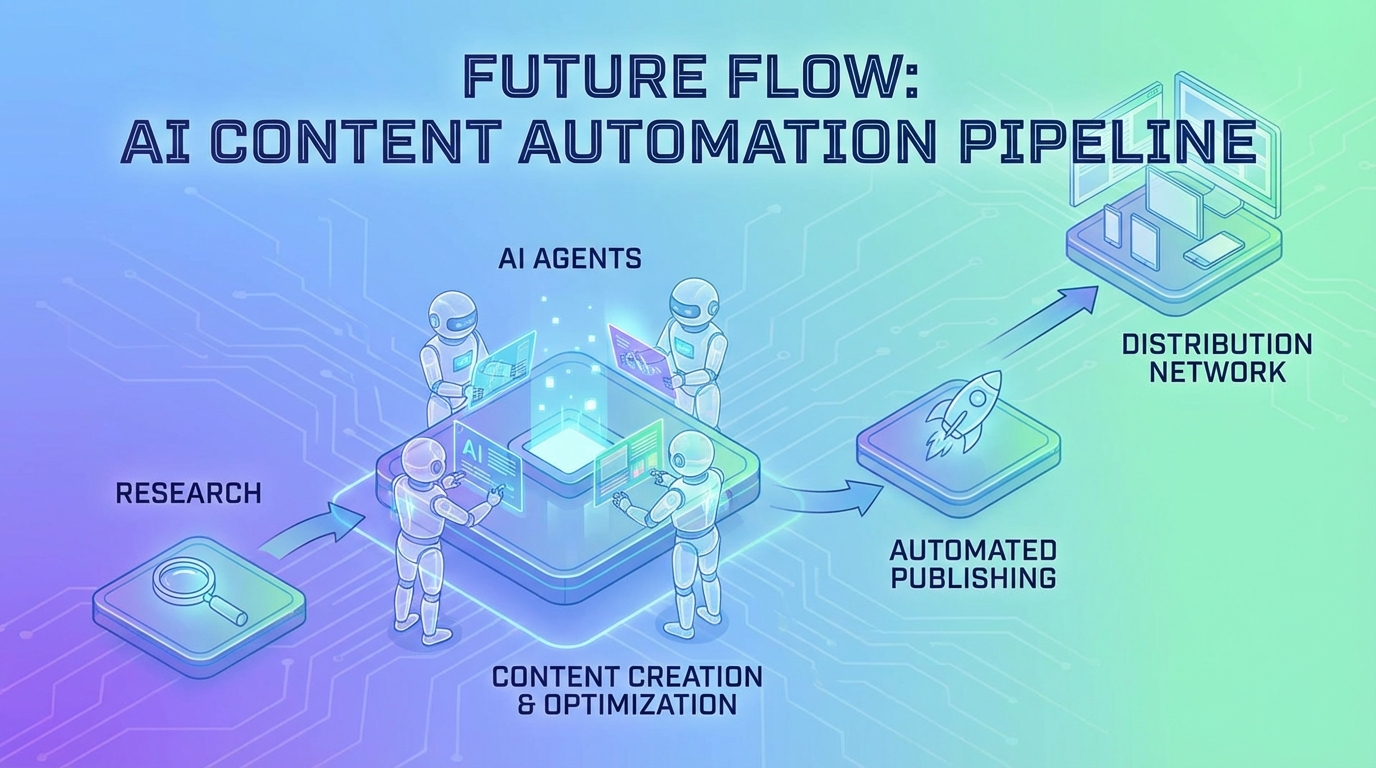
Where is this technology heading?
Real-Time Research Integration
Current AI writers work from training data with cutoff dates. Emerging tools integrate real-time web search, accessing current information during generation. This reduces factual errors and keeps content relevant.
Multimodal Content
Text-only output is becoming obsolete. AI tools increasingly generate:
- Custom images matching content context
- Infographics and data visualizations
- Video scripts with B-roll suggestions
- Audio content and podcast outlines
Suparank already generates AI images for blog posts—expect this to become standard.
Agentic Workflows
The biggest shift is toward AI agents that handle entire content processes autonomously. Rather than generating a single piece of content, these systems:
- Research topics and identify content gaps
- Plan content calendars based on keyword opportunities
- Write, edit, and optimize content
- Publish and promote across channels
- Analyze performance and iterate
Human oversight remains essential, but the manual work continues to decrease.
Getting Started with AI Blog Writers
Ready to implement? Here’s a practical starting point:
- Choose your tool: For integrated workflows, try Suparank. For maximum flexibility, use Claude or ChatGPT directly.
- Create a content brief template: Standardize your inputs for consistent quality.
- Start with one post: Generate, edit, and publish a single piece before scaling.
- Track performance: Compare AI-assisted content against your existing content in terms of traffic, engagement, and conversions.
- Iterate on prompts: Save prompts that produce good results. Refine ones that don’t.
The goal isn’t to replace human writers—it’s to amplify their output. A skilled writer using AI tools can produce 5-10x more content without sacrificing quality. That’s the real opportunity.
FAQ
Q: Will Google penalize AI-generated content?
A: No. Google’s stance is that AI-generated content is acceptable as long as it provides value to users. They penalize low-quality content regardless of how it was created. Focus on quality, not origin.
Q: How much editing does AI content typically need?
A: Plan for 20-40% of the time you’d spend writing from scratch. Better prompts and established workflows reduce this over time.
Q: Can AI match my brand voice?
A: Yes, with training. Provide examples of your existing content and explicit voice guidelines. Most AI tools can learn and replicate specific styles.
Q: Is AI content detectable?
A: Current detectors are unreliable, with high false-positive rates on human-written content. More importantly, well-edited AI content is indistinguishable from human-written content to readers—which is what actually matters.
Q: Should I disclose AI use?
A: There’s no legal requirement in most jurisdictions. Ethically, the standard is evolving. Many publishers treat AI as a tool like spell-check or Grammarly—used but not disclosed. Make your own judgment based on your audience expectations.

Leave a Comment