

Can You Bring Perfume in Carry On? Size Limits and Duty Free

You can bring perfume in carry on if the bottle holds 3.4 ounces (100 ml) or less and fits inside your quart bag with your other liquids. Larger bottles go in checked baggage, where a separate set of limits applies because perfume is flammable. Duty free perfume bought after security is exempt while the sealed bag stays intact.
Perfume is one of the few items where the checked bag rules are worth reading rather than assuming, since most people have never met them.
The Carry-On Rule

This part is the same as for any other liquid, with one wrinkle that costs people expensive bottles every day.
The size printed on the bottle decides the outcome, not how much is left in it. A half empty 100 ml bottle passes. A barely used 150 ml bottle does not, and there is no version of that conversation where it does. The TSA applies the standard liquids rule with no special provision for fragrance.
That makes 100 ml the practical ceiling, and in a quart bag already holding sunscreen, cleanser and toothpaste, a 100 ml bottle is expensive real estate. A 10 ml atomiser covers a two week trip for most people and leaves the space for something with no small version.
| Format | Carry-on | Checked bag |
|---|---|---|
| Under 3.4 oz (100 ml) | Allowed, in the quart bag | Allowed |
| Over 3.4 oz (100 ml) | Not allowed | Allowed, within FAA limits |
| Refillable travel atomiser | Allowed | Allowed |
| Solid perfume balm or stick | Allowed, no volume limit | Allowed |
| Duty free, sealed with receipt | Allowed over 100 ml | Allowed |
| Aerosol body spray | 3.4 oz or less, cap secured | Allowed, within FAA limits |
The Checked Baggage Limits Nobody Knows
Almost nobody reads this far into the rules, which is fine for a single bottle and a genuine problem for anyone moving a collection or a full grooming kit.
Perfume is alcohol based and therefore flammable, so it falls under hazardous materials rules in the hold rather than travelling freely. The FAA allows perfume, cologne, nail polish and similar toiletries in checked baggage up to 0.5 kg or 500 ml per container, with a total aggregate of 2 kg or 2 litres per person.
The per container figure surprises people, because 500 ml is larger than almost any perfume bottle sold. In practice the aggregate total is the limit that binds, and it binds on families and on anyone travelling with a full grooming kit rather than on a single bottle of fragrance.
For a normal traveller with two or three bottles this is never a constraint. It matters if you are moving a collection, bringing back gifts, or travelling with a full set of toiletries alongside the fragrance, since the same allowance covers hairspray, nail polish remover and aerosol deodorant too.
🔢 Quick Numbers
- 3.4 ounces (100 ml) is the maximum bottle size for perfume in carry-on (TSA liquids rule)
- 500 ml (17 fl oz) is the maximum per container in checked baggage, and 2 litres the total per person across all toiletries (FAA PackSafe)
- No volume limit applies to solid perfume balm or stick in either bag (TSA liquids guidance)
Duty Free and the Sealed Bag
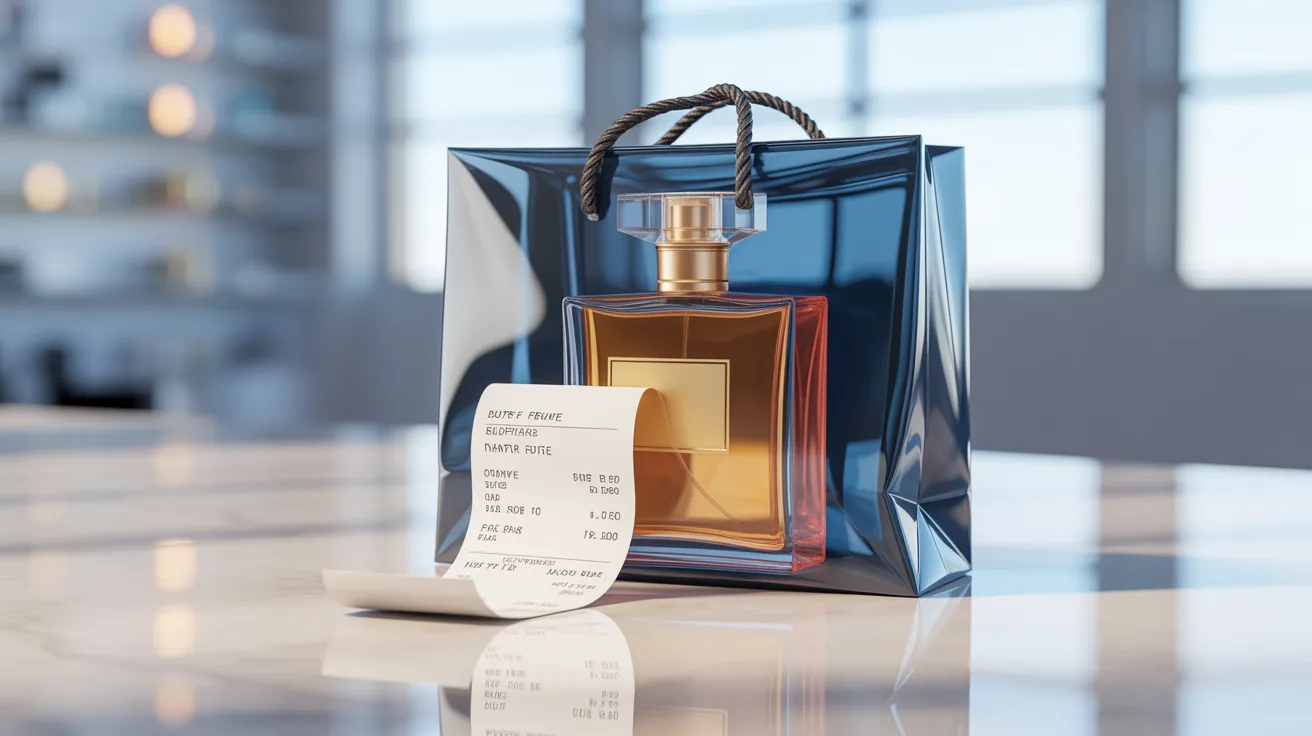
This is the exemption most travellers rely on, and it is narrower and more fragile than its reputation suggests.
Perfume bought after security may exceed 100 ml on your onward flight, provided it stays in the tamper evident bag the retailer sealed it in with the receipt visible inside. The TSA lists the conditions on its own perfume guidance, and they are strict about the seal.
The exemption also assumes the purchase was made airside on that journey. A bottle bought at a shop in town, however well sealed it looks, is an ordinary liquid, and so is duty free from a trip you took last month. Planning the shopping around the itinerary rather than the other way round is what makes this work.
Open the bag to admire the purchase during a connection and the bottle becomes an ordinary over-limit liquid at the next checkpoint. On a multi leg journey this catches people regularly, because the exemption feels like it belongs to the bottle rather than to the packaging.
⚠️ Common Mistake to Avoid
The recurring error is buying a large bottle of perfume in duty free on the outbound leg and carrying it around for two weeks before flying home. On the return journey it is no longer a duty free purchase from that airport, the sealed bag has usually been opened, and a 100 ml bottle is over the limit. Buy fragrance on the way home, or put it in a checked bag.
Protecting a Bottle in Transit
Getting the bottle there intact is a separate skill from getting it past security, and it is the part that actually goes wrong more often.
Glass and cargo holds are a poor combination. Wrap the bottle in clothing and place it in the middle of the case rather than against the shell, where impact is transmitted directly. A sock is genuinely effective and costs nothing.
Original boxes earn their space here. The cardboard and moulded insert a fragrance ships in is a purpose built protector, and keeping it for travel costs nothing since it is already in a cupboard. Travellers who buy fragrance abroad and ask the shop to keep the box are doing the same thing for free, which matters when a broken bottle turns a bargain into a loss.
Pressure is the other consideration. Atomisers can weep at altitude, so a small sealed bag around the bottle protects everything near it. Anyone who has opened a case to find a shirt smelling permanently of someone else’s aftershave understands why this matters, and it is one of the small habits worth building into packing.
💡 Pro Tip
Decant into a refillable atomiser rather than carrying the original bottle. A 5 ml or 10 ml atomiser holds far more applications than a two week trip needs, costs a few dollars, survives being dropped, and frees the quart bag space that a full size bottle would take. Fragrance shops will often decant for you if you ask.
ℹ️ Good to Know
The 100 ml standard applies almost everywhere, but a growing group of UK airports has lifted the container limit to 2 litres after installing new scanners, Heathrow among them across all terminals. That helps on departure and does nothing for the return leg from an airport that has not changed. Pack to the strictest checkpoint on your route and treat the relaxed rule as a bonus rather than a plan.
Security and hazardous materials rules change and are enforced at the discretion of staff on the day. Confirm current guidance with your departure airport and airline before travelling with fragrance.
Wrapping Up
Quick Recap:
- Carry-on perfume must be in a bottle of 3.4 ounces or less, inside the quart bag.
- Checked bottles are capped at 500 ml each and 2 litres total across all toiletries.
- Duty free over 100 ml only stays exempt while the sealed bag is unopened.
- A refillable atomiser solves the whole problem for a few dollars.

Leave a Comment