
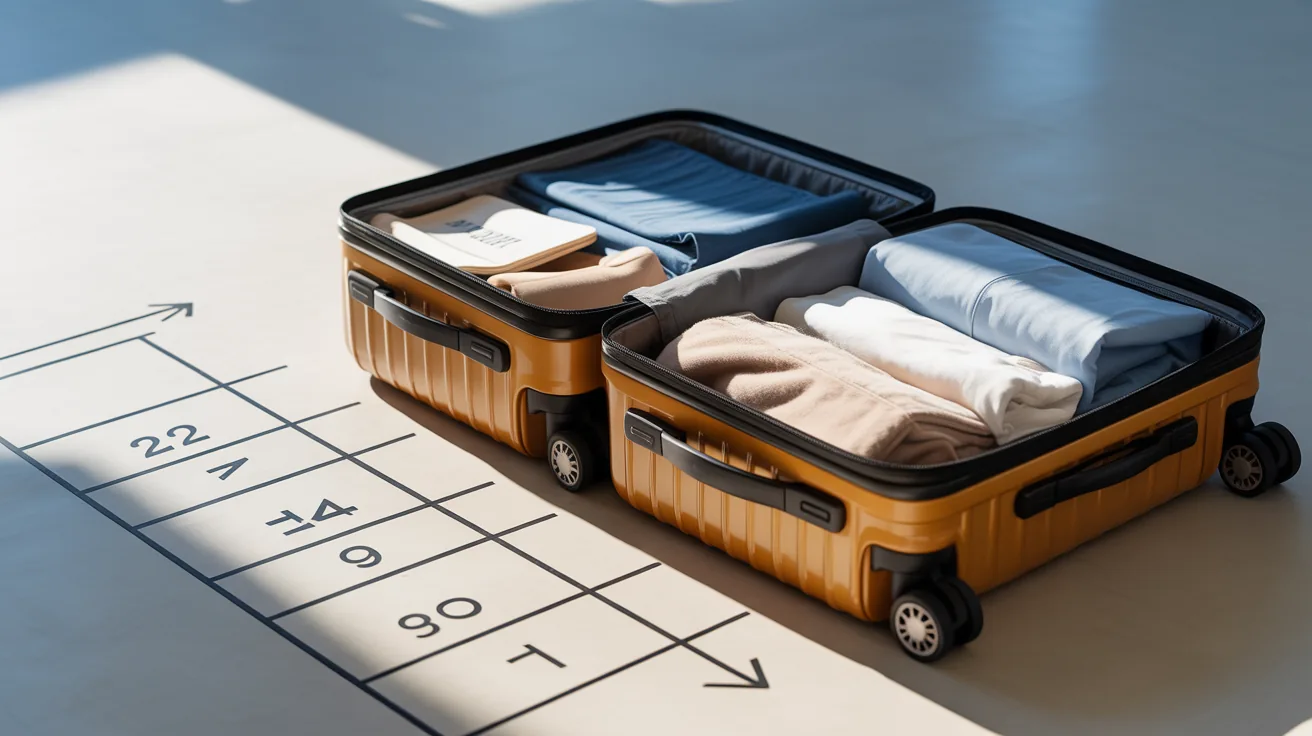
What Happens If Your Carry On Is Too Big? Gate Checks and Fees

If your carry on is too big, a gate agent tags it and sends it to the hold, and you usually pay a fee at that point. On major US carriers this is the standard checked bag charge, commonly 35 to 45 dollars, while budget airlines charge considerably more at the gate than they would have at booking. The bag then travels as checked baggage and you collect it at the carousel.
What changed recently is not the limit but the enforcement. Airlines have moved from an honour system to automated sizers, and bags that always passed are now being caught.
The Limits You Are Being Measured Against
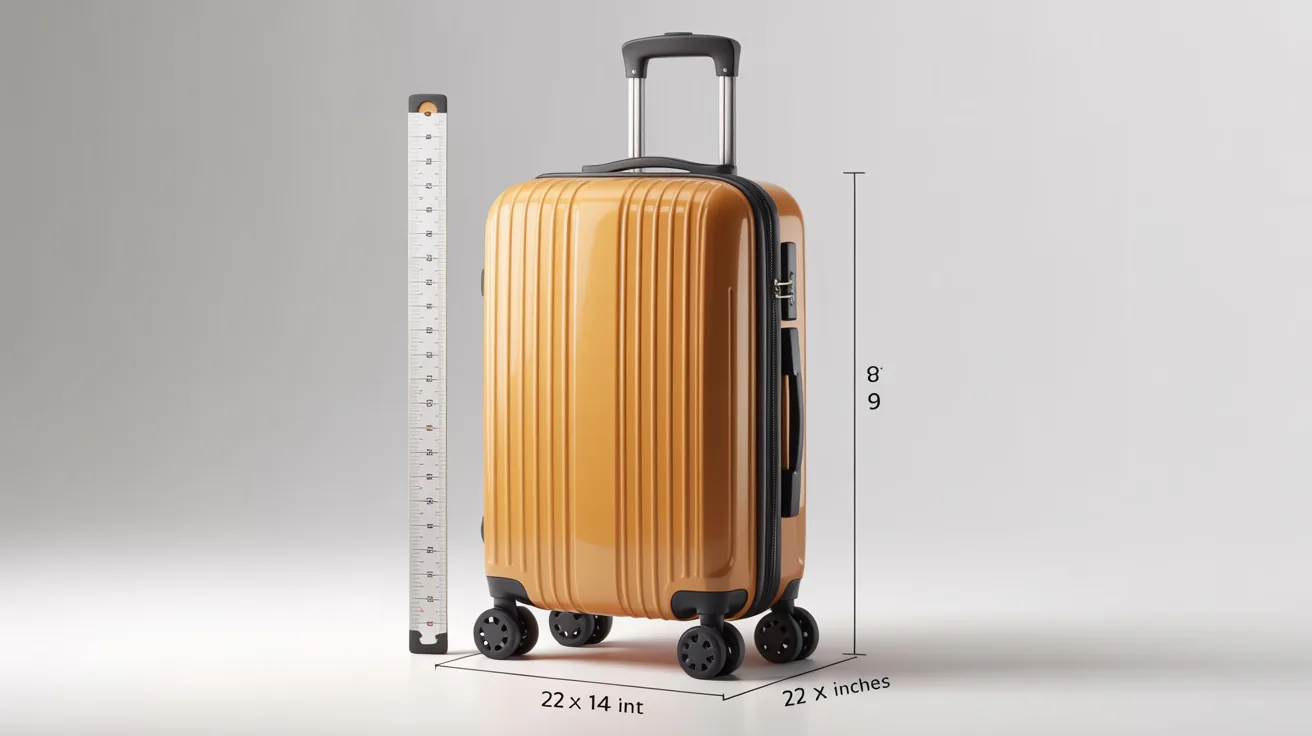
The standard US carry-on is 22 x 14 x 9 inches including wheels and handles, a figure that has been stable for years, and it covers American, Delta, United, Alaska and JetBlue. Southwest allows a larger 24 x 16 x 10. European budget carriers are tighter and enforce more consistently, with Ryanair’s cabin bag allowance notably smaller than the US standard.
The dimension people miscalculate is depth. Manufacturers measure a bag empty and compressed, airlines measure it packed and bulging, and a soft backpack that fits the frame at home can fail once it is full. Airlines publish their own limits and restricted items separately, and both are worth reading before a tight trip.
| Situation | What happens | Typical cost |
|---|---|---|
| Oversized at check-in desk | Checked as normal baggage | Standard checked bag fee |
| Oversized at the gate | Gate checked, tagged at the aircraft | Same or higher than desk fee |
| Budget airline, unpaid carry-on | Charged at the gate | Often double the booking price |
| Bins full, bag within limits | Gate checked, usually free | No charge on most carriers |
| Basic economy with a carry-on | Refused at the gate | Carry-on fee plus possible penalty |
Gate Check Versus Being Forced to Check
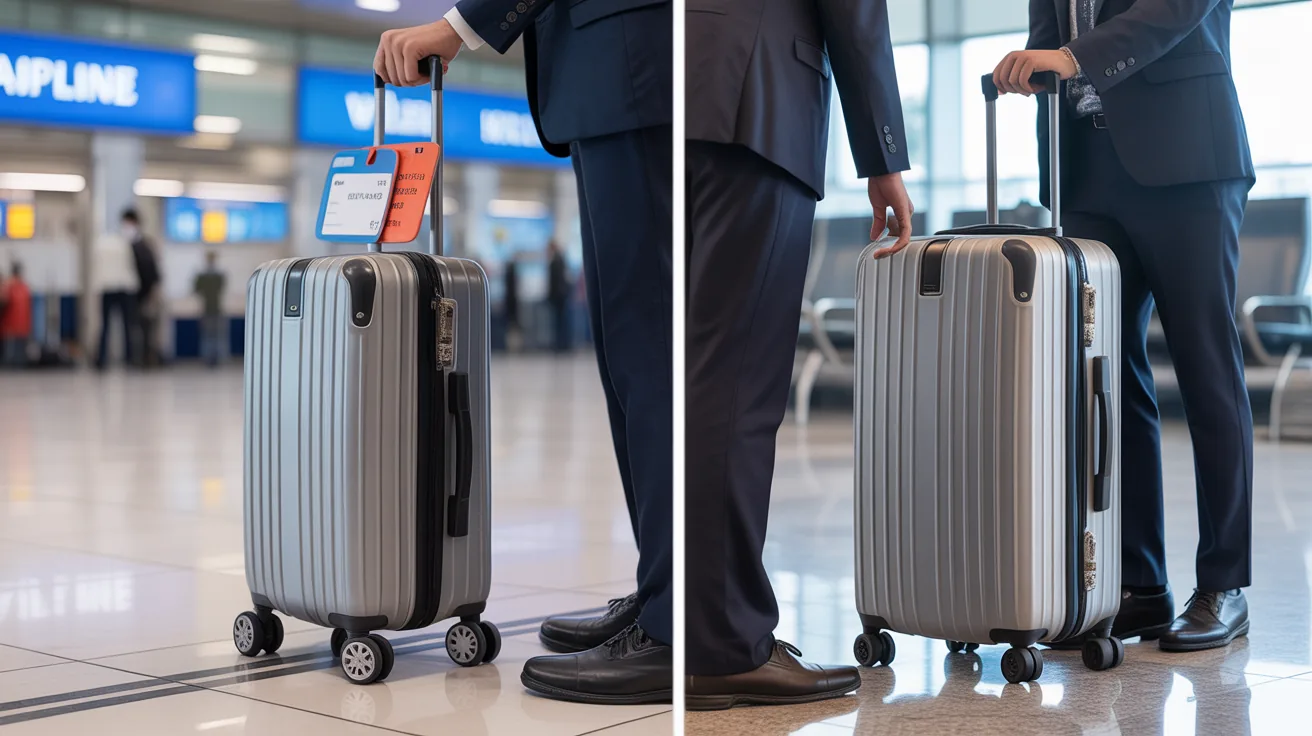
Both end with your bag in the hold, but only one of them ends with a charge, and knowing which is which changes how you respond at the gate.
These are two different things and the distinction matters. A voluntary gate check, offered when the overhead bins fill up, is normally free and is often announced at the gate before boarding. An involuntary gate check because your bag is oversized is a fee.
Airlines announce voluntary gate checks over the gate PA precisely because they want volunteers, and taking them up on it early is often the easiest version of the day. Waiting until you are challenged is the version that costs money.
The bag also travels differently. A gate checked bag is loaded last and often returned at the aircraft door on arrival, or at the carousel on a longer route. Either way it is out of your hands for the flight, which is why anything you need has to come out first.
⚠️ Common Mistake to Avoid
The expensive mistake is not the fee, it is what stays in the bag. A gate checked bag goes into the hold, where power banks and spare lithium batteries are prohibited outright, and where laptops, medication, passports and jewelry are excluded from most airline liability. If your bag is tagged, open it and take those items out before you hand it over. It takes ten seconds and it is the whole difference between an annoyance and a real problem.
📚 Did You Know?
United deployed automated bag sizer scanners at more than 30 airports during late 2025 with plans to expand further through 2026, and other major carriers have been testing similar systems. These measure bags before boarding and flag oversized ones without any gate agent discretion involved, which is why bags that passed by eye for years are suddenly being stopped.
Why It Is Cheaper to Decide Early
The fee structure is designed to punish leaving it late, and it does so consistently across almost every carrier.
There is a timing element too. Bins fill front to back as boarding progresses, so a passenger in a late boarding group is far more likely to be asked to gate check even with a compliant bag. Boarding earlier is worth more than it looks, which is one reason seat selection and boarding group occasionally justify their cost when the schedule at the other end is tight.
Every stage of the journey costs more than the one before. Paying for a checked bag at booking is cheapest, at the desk is more, and at the gate is most. On budget carriers the gap between booking and gate can be double, and it is charged per direction rather than per trip.
If you suspect your bag is borderline, the cheap move is deciding at home. Measure it packed, including wheels, handles and any expansion zip you have opened, and if it is over, pay for the hold at booking. That is usually a smaller cost than the fare difference you were chasing when you picked the flight.
What to Do If It Happens Anyway
Stay pleasant about it, which is not only manners. Gate agents have discretion on borderline bags and almost none on obviously oversized ones, and the discretion tends to go to people who are not arguing. Once the decision is made, the fee is not negotiable at the aircraft door.
Take the valuables and batteries out, take a photo of the bag before it goes, and keep the tag stub. If the bag is delayed or damaged, that stub and photo are what make the claim straightforward rather than a discussion.
Then adjust for the return leg, which people forget. Travellers usually come home heavier than they left, so a bag that was borderline outbound is over on the way back. Buying the hold allowance for the return before you get to the airport is one of those decisions that costs nothing to make early.
ℹ️ Good to Know
Security limits and airline limits are entirely separate systems. The TSA screens for prohibited items and does not measure or enforce airline size restrictions, so clearing the checkpoint tells you nothing about whether your bag will pass at the gate. Airports publish their own hand baggage guidance on top of both, which is a third set of numbers on some routes.
💡 Pro Tip
Photograph your bag next to a tape measure once, packed as you normally pack it, and keep the image on your phone. It settles the question in your own mind before every trip, and it stops you relying on the manufacturer’s marketing dimensions, which are measured empty and are frequently optimistic.
Airline size limits, fees and enforcement practices differ by carrier and route and change without much notice. Confirm the rules with your specific airline before you travel.
Final Thoughts
Quick Recap:
- An oversized carry-on gets gate checked and you pay the checked bag fee, usually 35 to 45 dollars on major US carriers and more on budget airlines.
- Measure your bag packed, with wheels and handles included, not empty.
- Take power banks, batteries, medication and valuables out before the bag goes to the hold.
- Paying for the hold at booking is always cheaper than paying at the gate.

Leave a Comment