
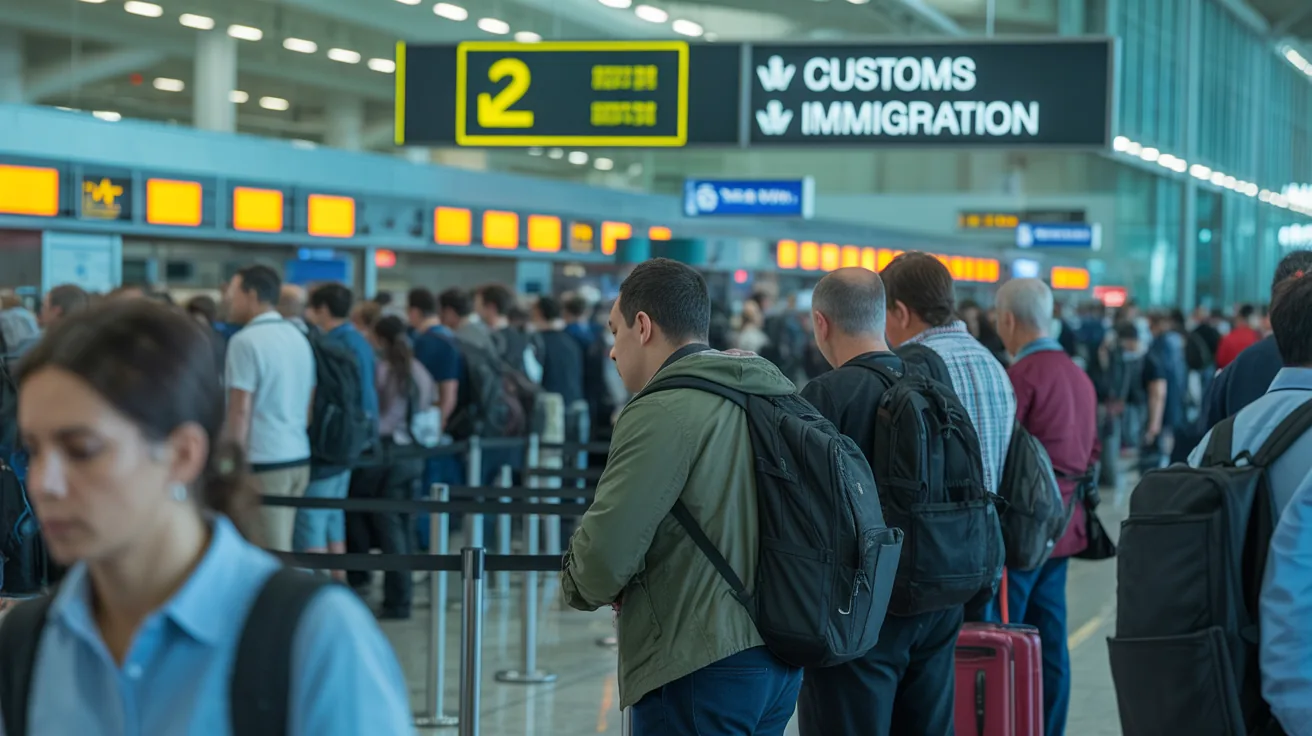
How Long Does It Take to Get Through Customs? Realistic Timings

Budget 30 to 60 minutes for immigration and customs on a normal international arrival, and 90 minutes or more at a busy hub during peak hours. In Europe the honest answer got longer in 2026, because the new biometric entry system has produced queues of two to three hours at some airports during peak periods.
The number that matters is not the average, and averages are what most published figures give you. It is the worst realistic case on your specific route, because that is what determines whether your onward connection survives.
What You Are Actually Queuing For
Understanding which of the two is slowing you down changes what you can do about it, because only one of them responds to anything you control.
Two checks happen on arrival and people conflate them. Immigration checks who you are and whether you may enter. Customs checks what you are bringing in. Immigration is where the queue forms, and customs is usually a walk through unless you are stopped.
The immigration queue is the entire delay for most travellers. Its length depends on how many wide body aircraft landed in the previous forty minutes rather than on anything you control, which is why the same airport can take eight minutes or eighty on different days.
| Scenario | Realistic time | Notes |
|---|---|---|
| US arrival with Global Entry | 5 to 15 minutes | Kiosk or facial recognition |
| US arrival, standard lane | 30 to 60 minutes | Longer at large hubs on peak banks |
| Schengen arrival, EU passport | 10 to 20 minutes | Automated gates where available |
| Schengen arrival, non-EU passport | 45 minutes to 3 hours | Biometric registration adds time |
| UK arrival, eligible e-gate user | 10 to 25 minutes | Faster than the manned desk |
| Asian hub, off peak | 15 to 30 minutes | Generally efficient |
Why Europe Got Slower in 2026
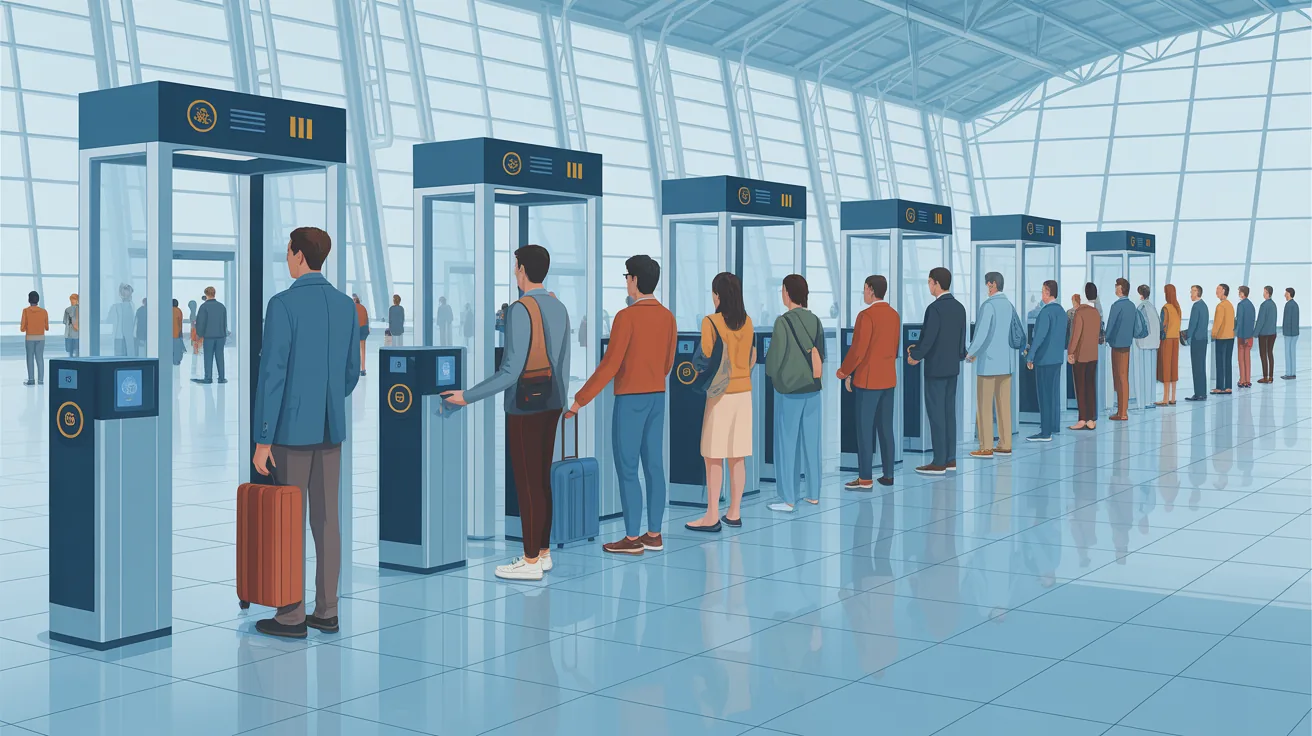
If you have flown into Europe recently and been surprised by the queue, this is why, and it is worth understanding because it changes how much buffer a European connection needs.
The European Union launched its Entry/Exit System on 12 October 2025 and phased it in across the Schengen area over six months, reaching full operation in April 2026. It replaced passport stamps with a digital record and added fingerprints and a facial image for non-EU travellers on first registration.
The registration itself is the bottleneck. Airports Council International Europe has recorded peak waits of up to three and a half hours, and the airline industry has warned of longer figures during the busiest summer weeks. Several member states asked for the checks to be eased and the EU declined to pause the system, while acknowledging problem locations.
The follow-on authorisation system, ETIAS, has been repeatedly delayed. The official position has pointed to late 2026, while reporting through mid 2026 suggested a slip into the following year, so anyone planning ahead should verify the current status rather than assume.
🔢 Quick Numbers
- 12 October 2025 is when the EU Entry/Exit System launched, reaching full operation across the Schengen area in April 2026 (UK House of Commons Library briefing)
- Up to 3.5 hours is the peak wait recorded at some European borders during the rollout (Airports Council International Europe)
- 30 to 60 minutes remains the realistic planning figure for a standard international arrival outside peak periods
What Actually Speeds You Up
Trusted traveller programmes are the only reliable lever. Global Entry for arrivals into the United States, and the automated gates available to eligible passport holders in the UK and EU, cut a 40 minute queue to a few minutes. The enrolment cost is trivial against a single missed connection.
Everything else is positioning. Aircraft empty from the front, and the walk to immigration is often long enough that being among the first two hundred passengers off makes a real difference to where you land in the queue. On a wide body aircraft the gap between row 10 and row 50 can be twenty minutes at the desk.
💡 Pro Tip
Fill in any arrival or customs declaration on the aircraft rather than at the hall. Many countries now use a digital form that has to be submitted before you reach the desk, and a passenger fumbling with airport wifi to complete it is the one holding up the line. Screenshot the confirmation, since terminal connectivity is unreliable exactly where you need it.
Connections Through a Customs Hall
Not every connection is a walk between gates. Some route you through the border twice, and those are the itineraries where a tight layover quietly becomes a missed flight.
Some connections require you to clear immigration and customs even though you are only changing planes. The United States is the significant example, where every arriving passenger enters formally, collects checked baggage, clears customs and re-checks the bag before continuing. That process alone can consume two hours.
Most large hubs outside the US offer airside transit that skips the border entirely, so a connection in Doha or Singapore is a walk between gates. Airlines publish their own connection guidance too, and a carrier’s minimum connection time is not the same number the airport uses. Knowing which model applies to your route is the single most useful thing to establish before booking, and it belongs in the comparison you do when choosing the flight.
⚠️ Common Mistake to Avoid
The recurring error is treating the airline’s published minimum connection time as a realistic plan when your route includes a customs hall. Minimum connection times assume everything works. On a US connection with baggage reclaim and re-check, a 90 minute layover that looks legal on paper regularly fails, and the airline rebooks you rather than compensating you because the itinerary was technically valid.
Planning the Buffer
Work backwards from the worst realistic case rather than the average, which is the same discipline that applies to any part of a trip with a hard deadline attached. For a European arrival in summer with an onward connection, three hours is defensible. For a US arrival with baggage reclaim, three hours is close to the minimum.
Airports vary enormously within the same country, and even within the same airport by terminal, which is why a figure you remember from one trip transfers badly to another. A hub built around connecting traffic processes arrivals faster than one built around point to point flights, whatever the queue looks like on the day.
The cost of a longer layover is a couple of hours in a terminal. The cost of a short one is a missed flight, a rebooked night and a hotel, which is a poor trade for the small amount of time it appeared to save.
Border processing times and entry requirements change frequently and vary by nationality, airport and season. Check your destination’s official border agency guidance before you travel.
What This Means for Your Next Trip
The interesting shift is that border control has become the least predictable part of a journey. Flights run to schedule far more reliably than immigration halls do, and a system designed to be invisible has become the thing you plan around. Until the European rollout settles, the honest advice is to treat the border as a variable rather than a formality, and to build the itinerary so that a bad day at passport control costs you an afternoon rather than a flight.

Leave a Comment