
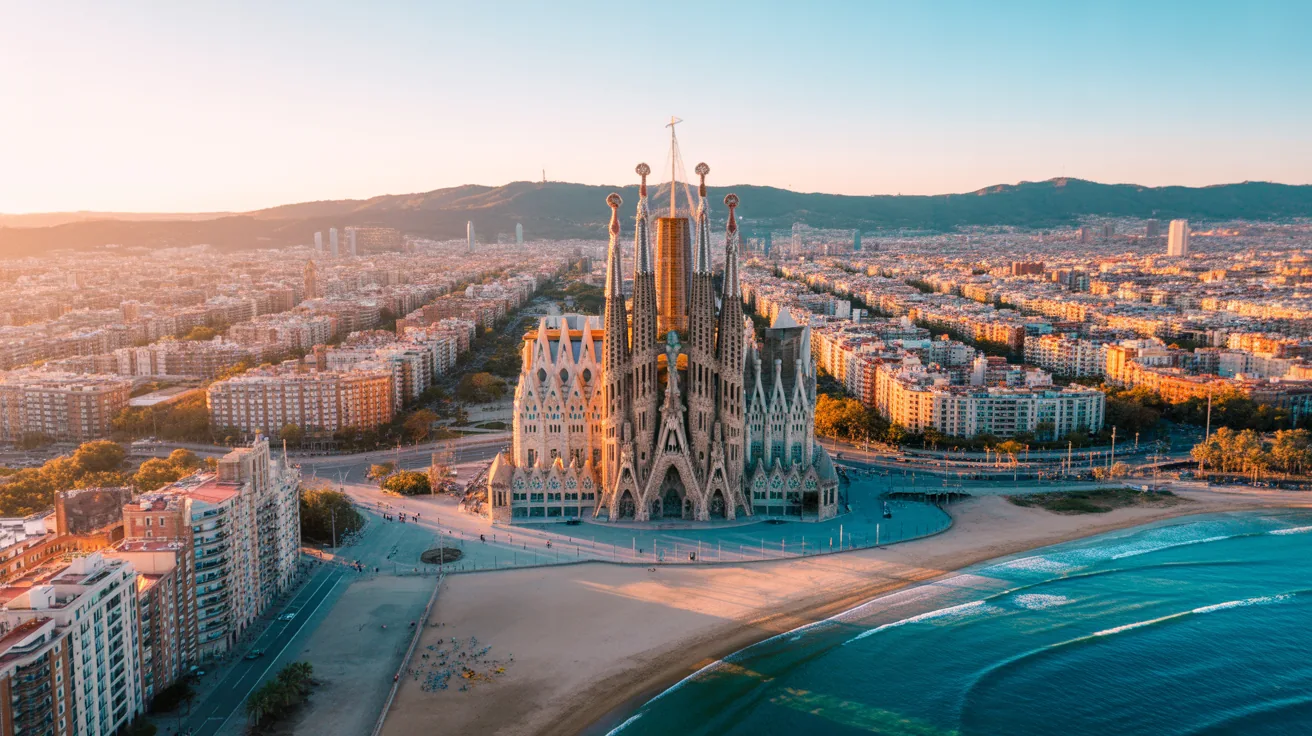
How Many Days in Barcelona Is Enough?

Four days is the right answer for Barcelona. Three covers the Gaudi buildings and the old town at pace, four adds the beach, a neighbourhood and Montjuic without rushing, and five is justified if you want a day trip. Barcelona is larger than visitors expect and the sights are spread across it, which is the single thing most first time itineraries get wrong.
What has changed recently is the cost of staying. Catalonia doubled its tourist tax in 2026, which makes the length of the trip a budget question in a way it was not before.
How Four Days Divide
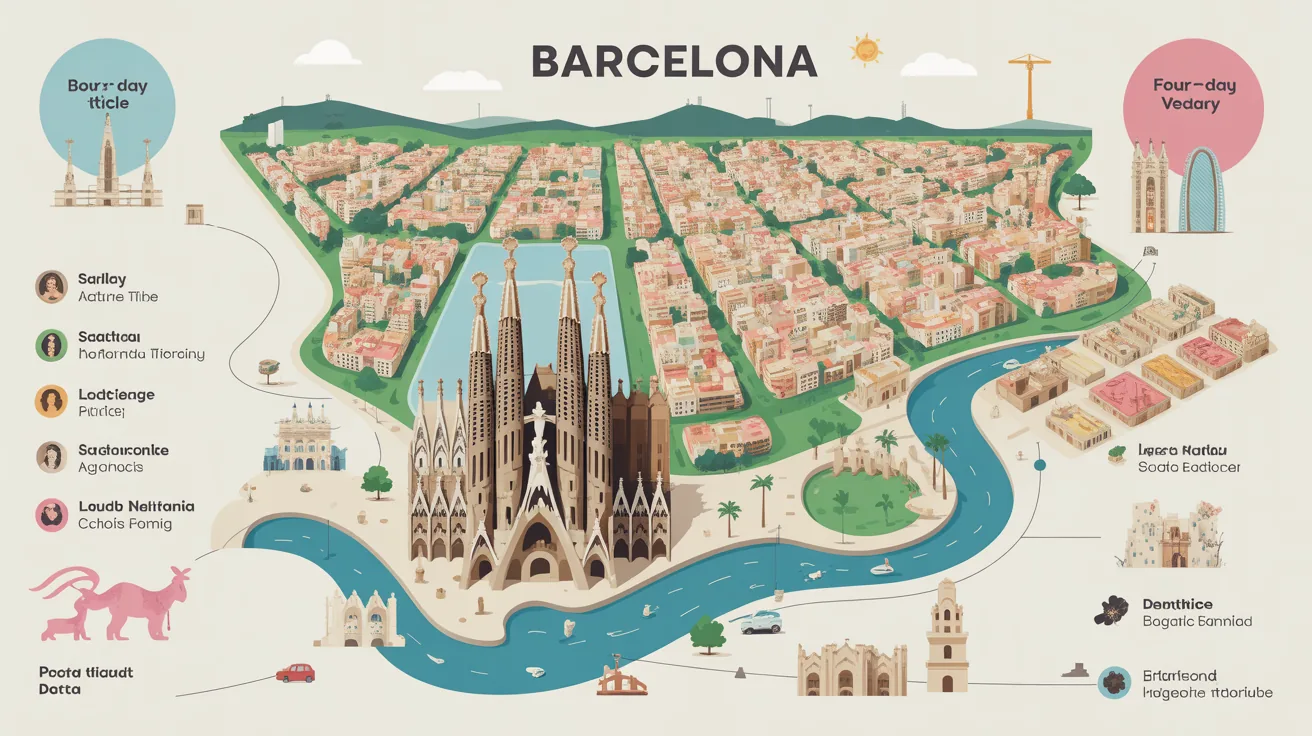
Barcelona punishes an itinerary organised by attraction rather than by area, because the Gaudi buildings are deliberately spread across the city. Planning the days as blocks rather than as lists is what keeps it manageable.
Group by district or you will spend the trip on the metro. The Sagrada Familia and the Eixample’s modernist buildings make one day, and that day involves more walking than it looks like on the map. The Gothic Quarter, El Born and the Ribera make another, and that one is entirely on foot with no transport at all. Montjuic with its museums, gardens and views is a third, reached by funicular or cable car rather than on foot. Park Guell, Gracia and the beach fill a fourth, and that last day is the one most three day itineraries lose.
Gaudi is the reason Barcelona needs four days rather than three. Seeing two of the major buildings in one day is possible and seeing three is not, once queues and travel between them are counted. The major sites, the Sagrada Familia, Casa Batllo, La Pedrera and Park Guell, are scattered across the city and each takes ninety minutes to two hours with entry queues.
| Trip length | What fits | Verdict |
|---|---|---|
| 2 days | Sagrada Familia and the old town | A taster |
| 3 days | Gaudi highlights plus the Gothic Quarter | Workable, brisk |
| 4 days | Above plus Montjuic, Gracia, the beach | The right answer |
| 5 days | Above plus a day trip | Comfortable |
| 7 days | Neighbourhoods, coast, Montserrat | For a longer stay |
What Barcelona Now Costs to Sleep In
The Catalan parliament approved a doubling of the regional tourist tax in February 2026, taking effect on 1 April. Hotel guests now pay roughly 10 to 15 euros per person per night depending on the category of accommodation, up from 5 to 7.50, and short term rentals rose to around 12.50 euros per night, roughly double what they were before.
For two people on a four night trip that is a meaningful line on the bill, and it is charged per person rather than per room. The city has also committed to phasing out short term rental accommodation entirely by 2028, so the accommodation market is likely to keep shifting.
🔢 Quick Numbers
- 1 April 2026 is when the doubled Catalan tourist tax took effect, following approval in late February
- 10 to 15 euros per person per night is the current hotel range, up from 5 to 7.50 previously
- Around 12.50 euros per night applies to short term rentals, roughly double the previous rate
📍 Real-World Example
A four day plan that keeps the travel sensible: day one, Sagrada Familia on an early timed slot, then walk the Eixample past Casa Batllo and La Pedrera, ending with dinner in Gracia. Day two, the Gothic Quarter and El Born on foot with the cathedral and the Picasso Museum, then the beach at Barceloneta in the late afternoon. Day three, Montjuic by cable car for the castle, the Joan Miro Foundation and the views, down to Poble Sec for dinner. Day four, Park Guell in the morning on a booked slot, then Gracia’s squares at a slow pace. Each day sits in one part of the city.
The Booking Problem
This is the part that decides whether the trip works, and it happens weeks before you leave. Travellers connecting through a major hub should settle the entry slots first and the flights second.
Barcelona’s major sites all use timed entry and the popular ones sell out days ahead in summer. The Sagrada Familia is the tightest of them, particularly for tower access, and Park Guell’s monumental zone has a visitor cap that fills days ahead in the summer months.
Park Guell is worth a note of its own. Only the monumental core requires a ticket and the surrounding park is free, so a visitor who arrives without a booking can still walk the grounds, see the views and skip the queue entirely. Whether the ticketed section is worth it depends on how much Gaudi you have already seen that week.
Book these before you book anything else, and build the itinerary around the slots you get. The city’s most famous building is also due to reach structural completion after more than 140 years of construction, which is likely to increase demand rather than reduce it. Getting flights and entry slots to line up is worth doing in one sitting rather than two.
Beyond the Guidebook
The neighbourhoods are what people remember long after the buildings, and they are also where the four day version of the trip differs from the three day one. Gracia feels like a separate town with its own squares, Poble Sec and Sant Antoni have the food, and El Raval is genuinely mixed rather than polished for visitors. Each is twenty minutes from the centre and none of them appears on a standard three day list. None of these appear high in a three day itinerary and all of them are the reason to take four.
Eating follows the same pattern. La Rambla and the streets immediately around the cathedral are priced for people who will not return, and walking fifteen minutes in almost any direction improves both the food and the bill considerably.
The beach is closer than visitors expect, reachable on foot from the old town, and Barcelona is unusual among major European cities in having one at all. It is also worth knowing that the city has become visibly tense about tourism over the last few years, with record visitor numbers and local protests, so behaving like a guest rather than a customer matters more here than in most places. The EU’s Entry/Exit system now registers non-EU travellers biometrically on first entry to the Schengen area, and airlines serving Barcelona publish their own guidance for connecting passengers.
Tourist tax rates, entry ticket systems and accommodation rules in Barcelona are changing quickly. Check current rates and booking requirements before you travel.
Where to Go From Here
The interesting thing about Barcelona now is that the city is actively trying to change who visits and for how long. Doubling the accommodation tax, capping visitor numbers at the major sites and phasing out short term rentals all push in the same direction: fewer, longer, higher spending stays rather than crowds of day visitors. Whether that works is unresolved, but for an individual traveller the implication is clear enough. A four day trip built around neighbourhoods and booked slots is both the better visit and the one the city is designed to reward.

Leave a Comment