
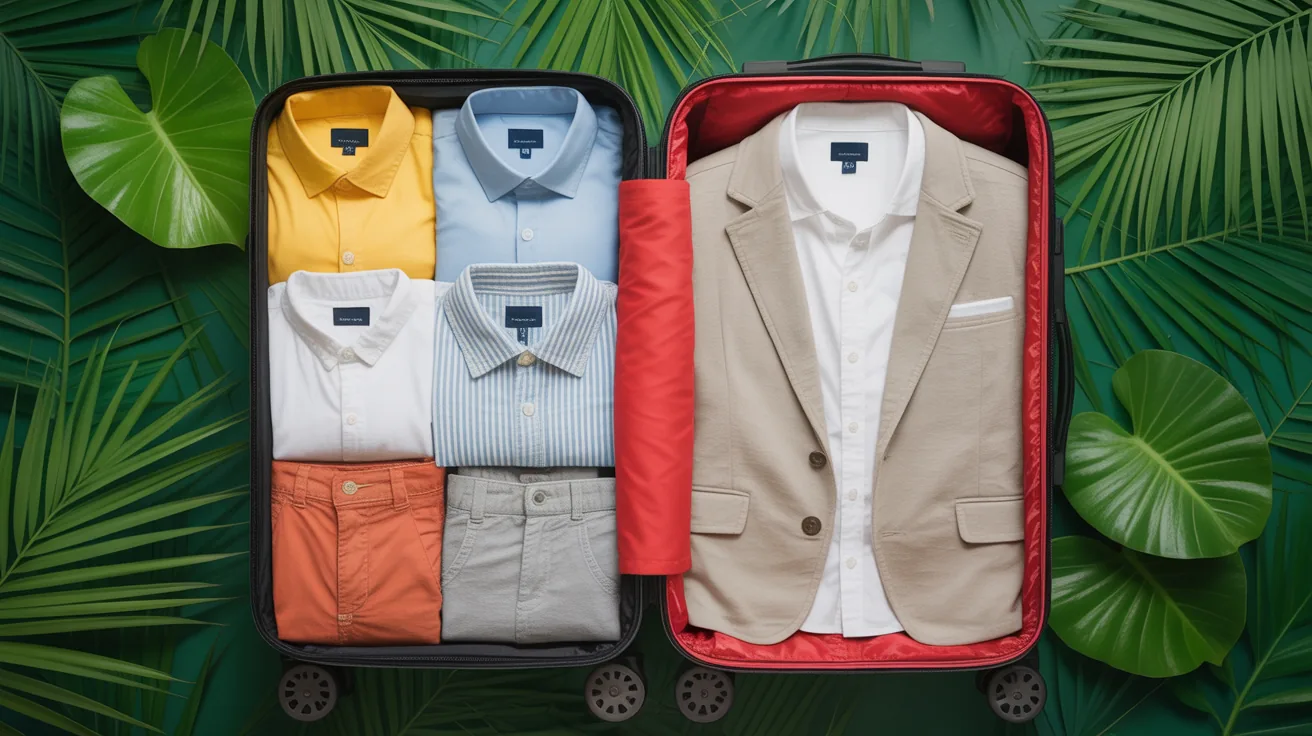
What to Pack for Thailand: A Climate by Climate Packing List

Thailand is hot and humid year round, so the packing list is light, breathable and built around modest coverage for temples. What changes is rain rather than temperature. The south and the north run different wet seasons, so the useful question is not what month you are going but which part of the country you are in.
Everything below assumes carry-on only is realistic, because it usually is. Laundry is cheap and fast almost everywhere in Thailand, which removes the main argument for a large bag.
The Climate Is Not One Climate
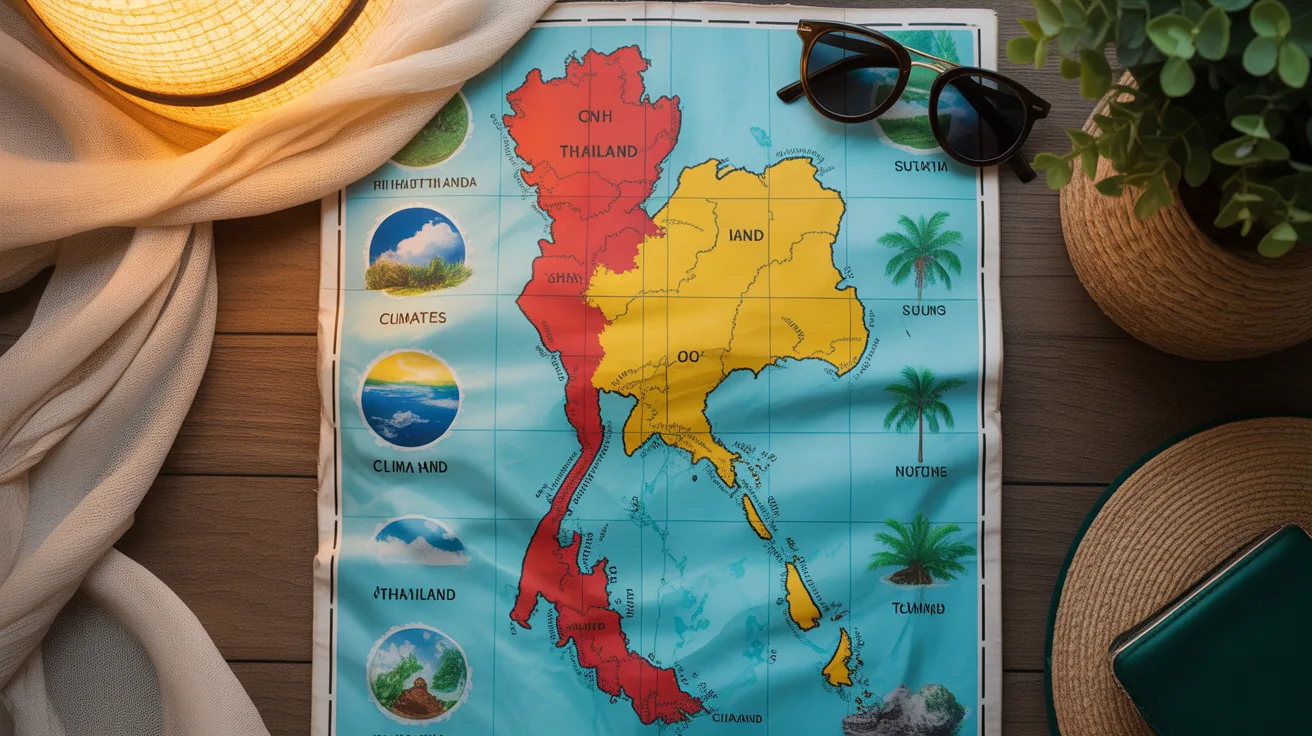
Northern Thailand around Chiang Mai has a cool dry season from November to February where evenings genuinely drop, sometimes into the low teens Celsius in the hills. The central plains and Bangkok stay hot throughout. The Andaman coast including Phuket and Krabi runs its monsoon roughly May to October, while the Gulf coast including Koh Samui gets its heaviest rain from October to December.
The two coasts are on opposite schedules, which is why a trip in September can be washed out on one side and fine on the other. If your dates are fixed and the weather matters, choose the coast rather than the month.
| Region | Hottest | Wettest | Pack extra |
|---|---|---|---|
| Bangkok and central | March to May | May to October | Light layers for aggressive air conditioning |
| Chiang Mai and north | March to May | July to October | A warm layer for Nov to Feb evenings |
| Phuket, Krabi, Andaman | March to May | May to October | Quick dry rain shell, sandals with grip |
| Koh Samui, Gulf coast | March to May | October to December | Same, on a later schedule |
Clothing: Light, Loose and Covered
The heat is manageable, the humidity is what people underestimate. Anything that does not breathe stops working within an hour of leaving an air conditioned room.
Linen, cotton and light technical fabrics work. Anything tight or synthetic becomes unpleasant within an hour outdoors in April. Loose trousers are more comfortable than shorts in real heat and they solve the temple problem at the same time.
Temples require shoulders and knees covered for both men and women, and this is enforced rather than suggested at major sites. A light scarf or sarong is the single most useful item in a Thailand bag, because it converts any outfit into temple appropriate clothing, works as a beach towel and covers you against the air conditioning on a night bus.
⚠️ Common Mistake to Avoid
The recurring mistake is packing for a beach holiday and then discovering half the itinerary is temples, palaces and cities. The Grand Palace in Bangkok turns people away daily for bare shoulders or short shorts, and the sarongs sold outside cost several times what one costs anywhere else. Pack one lightweight covering layer and the problem never arises.
What the Heat and Rain Actually Require
Air conditioning is the plot twist nobody packs for. Shopping malls, long distance buses and cinemas in Thailand are cooled aggressively, and a traveller dressed for 34 degrees outside can be genuinely cold on a four hour bus. The same light layer that covers you at a temple solves this, which is why it earns its place twice over and why one versatile item beats two specialised ones.
Two pairs of footwear cover almost every itinerary: sandals with real grip for wet surfaces and boat landings, and a light trainer for cities and walking. Flip flops are fine for a beach and dangerous on wet temple steps.
Rain in the wet season arrives hard and stops, rather than drizzling all day. A downpour that would ruin an afternoon in London lasts forty minutes and leaves the streets steaming. A compact rain shell beats an umbrella on a motorbike taxi or a longtail boat, and it dries in minutes. Quick dry clothing matters more in the wet season than waterproof clothing does.
📚 Did You Know?
Thailand replaced its paper TM6 arrival card with the Thailand Digital Arrival Card in May 2025, and it now applies to all foreign nationals arriving by air, land or sea. It is free, takes about ten minutes, and can only be submitted within a short window before arrival rather than weeks ahead. Travellers who leave it until the airport are the ones who have trouble.
Toiletries, Sunscreen and What to Buy There
Thailand is one of the easier countries in the world to underpack deliberately, because almost everything is available cheaply within a short walk of wherever you are staying.
Buy most toiletries in Thailand rather than carrying them. Pharmacies and convenience stores are everywhere and cheap, which frees your liquids allowance for the things that are harder to find. The standard 100 ml carry-on limit applies on the way out, so what you carry is what fits in the quart bag.
Two exceptions are worth packing. Sunscreen is expensive in Thailand and often sold in small sizes, and much of what is stocked contains skin whitening agents that western travellers do not expect. If you check a bag, the full size bottle travels within the FAA toiletry limits. The second is any prescription medication, which should always come with you rather than being sourced locally.
💡 Pro Tip
Pack half of what you think and plan on laundry. A wash and fold service in Thailand typically costs a small amount per kilogram and turns around the same day or overnight, which makes a five day wardrobe work for a three week trip. This one decision does more for the size of your bag than any packing technique.
Documents and the Things People Forget
Beyond the arrival card, a few small items save real trouble. A universal adapter, since Thai sockets accept several plug types inconsistently. A power bank for long travel days, though it must stay in your cabin bag. And a copy of your passport, kept separately from the passport itself.
Airlines flying into Thailand publish their own guidance on the arrival card process, and it is worth reading once because the submission window is short and the official service is free. Anyone planning to work remotely from Thailand should also check visa terms carefully, since the rules for longer stays are separate from tourist entry.
A dry bag is the one piece of gear worth buying specifically for this trip if any part of your itinerary involves boats or islands. Longtail transfers get everything wet, and a phone in a soaked backpack is a considerably more expensive problem than the bag costs.
Insurance is the item most often skipped and most often needed. Motorbike accidents are the single most common cause of serious injury among visitors, and many standard travel policies exclude them unless you hold the right licence, which is worth reading before you leave rather than after.
Entry requirements, visa rules and health guidance change. Check the Thai Immigration Bureau and your own government’s travel advice before you travel, and speak to a healthcare professional about vaccinations for your trip.
Putting It All Together
The thing that makes a Thailand packing list work is accepting that you are not really packing for Thailand, you are packing for one week and then doing laundry. Once that clicks, the list shrinks to light clothes, one covering layer, two pairs of shoes and the few things that are genuinely hard to buy there. Everything else is available within walking distance of wherever you are staying, usually for less than it cost at home.

Leave a Comment