
What Is Global Entry vs TSA PreCheck?

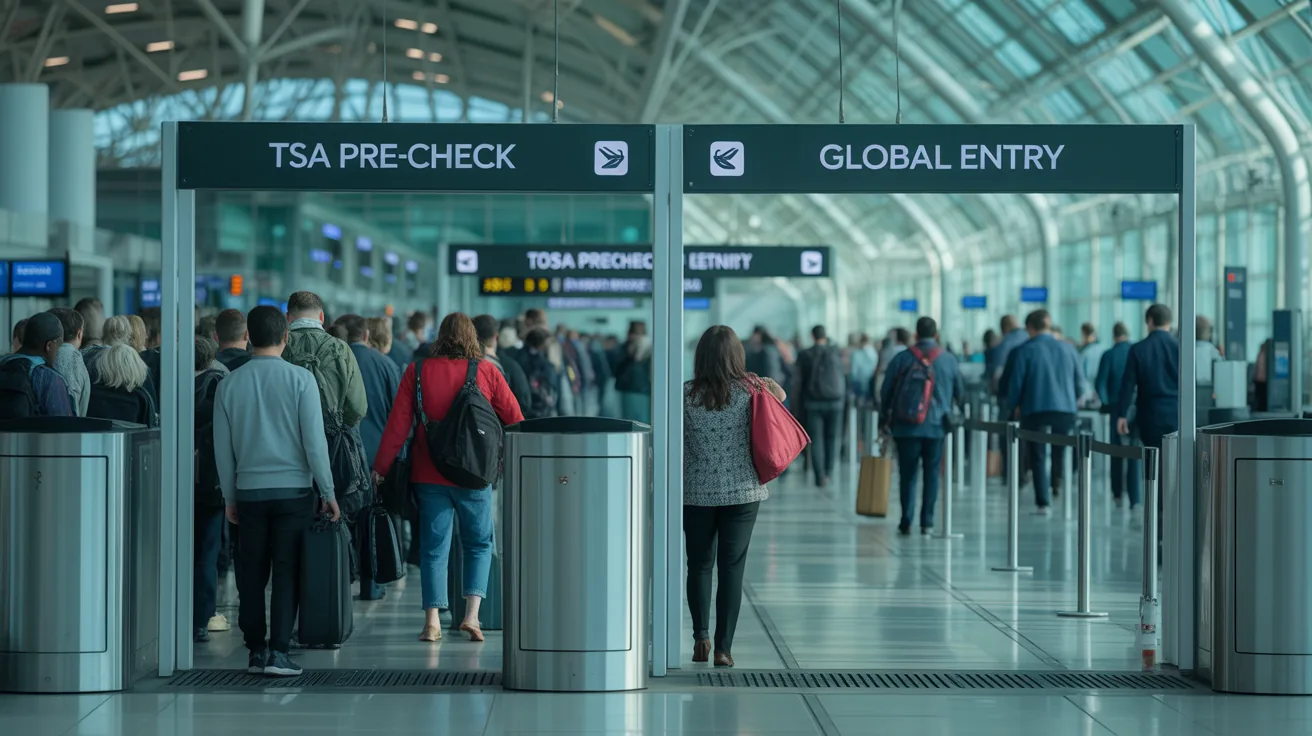
They are frequently discussed as rivals and they are not. They solve different problems at opposite ends of a trip. TSA PreCheck speeds up security screening when you depart from a US airport. Global Entry speeds up customs and immigration when you arrive back into the United States from abroad.
The single most useful fact is that Global Entry includes TSA PreCheck. Approval for the first automatically grants the second, at no extra cost and with no second application. You do not choose between them so much as decide whether you need the international half.
What Each One Covers

The split is clean once you see it, and it maps onto two completely different queues.
PreCheck applies at the departure checkpoint. Members use dedicated lanes and keep laptops, liquids, belts and light jackets in place, which makes screening both faster and less involved. Shoes now stay on for everyone, so that is no longer part of the difference.
It is the departure half of the journey and it stops mattering the moment you are through the checkpoint.
Global Entry applies on arrival. Instead of joining the general queue in the customs hall after an overnight flight, members use an expedited process and clear far more quickly, which is when a saved half hour is worth the most. Customs and Border Protection publishes how the programme works, including who is eligible.
| TSA PreCheck | Global Entry | |
|---|---|---|
| Where it helps | US departure security | US arrival customs |
| Covers the other? | No | Yes, includes PreCheck |
| Cost for five years | Under 85 dollars | 120 dollars |
| Applied for through | TSA and its providers | CBP Trusted Traveler site |
| Interview required | Yes, in person | Yes, in person |
| Physical card issued | No | Yes |
| Best for | Domestic only flyers | Anyone flying internationally |
The Cost Difference Is Smaller Than It Looks
People overweight the headline difference and underweight what it buys.
Global Entry costs 120 dollars for five years. PreCheck costs somewhat less depending on provider. Across the full five year term the gap works out to a few dollars a year, and for that you get the international benefit added to everything PreCheck already does.
If you leave the country even once a year, Global Entry is the better purchase. The reason people still buy standalone PreCheck is that it is quicker to obtain and does not require a passport, which matters for domestic only travellers and for anyone who needs the benefit before a trip in the next few weeks.
⚖ Pros & Cons at a Glance
Pros: Global Entry includes PreCheck for a small additional cost, adds expedited arrival clearance when you are most tired, issues a physical card, and is free for minors when a parent is enrolled or applying.
Cons: Global Entry requires a passport and a CBP background check that can take considerably longer than PreCheck’s, interviews at busy enrolment centres can be booked out for weeks, and the arrival benefit is worth nothing if you never fly internationally.
How the Applications Differ
The routes into the two programmes are entirely separate and one is noticeably simpler.
PreCheck is applied for through TSA and its authorised enrolment providers. TSA runs its own enrolment information, the online form is short, and appointments include fingerprints, documents and payment in around ten minutes.
The two applications do not talk to each other, so applying for one does not start the other.
Global Entry goes through the Trusted Traveler Programs site run by CBP, which requires a federal login account before you can begin the form at all. Most background checks are reviewed within a couple of weeks, but CBP notes that some take considerably longer depending on an applicant’s history, and a first time enrolment always requires an in person interview.
Both programmes issue results within days of a completed appointment in the ordinary case, and both run for five years from approval rather than from application.
The interview is the bottleneck. Dedicated enrolment centres in major cities are frequently booked several weeks ahead in busy periods, while airport enrolment centres often have same day availability for travellers already passing through, which is the workaround most people eventually find.
💡 Pro Tip
Once you are approved for Global Entry, your membership number is what goes in the Known Traveler Number field of an airline booking. Showing the physical card at a security checkpoint does nothing at all. The card is for the arrival hall; the number is what produces the PreCheck indicator on a boarding pass at departure. This confuses a great many new members who assume the card is the credential, and it is the single most common reason a valid membership appears not to work.
Where CLEAR Fits, and Whether You Need It
CLEAR is a separate commercial service and is often confused with both. It is run by a private company rather than a government agency, which is the root of most of the confusion. It verifies your identity biometrically so you skip the document check queue, then delivers you to whichever screening lane you are entitled to use.
The distinction is that CLEAR handles who you are and the government programmes handle how you are screened. They stack rather than compete, which is why some frequent flyers hold both.
It costs substantially more per year than either government programme costs for five, and it does not change your screening. It solves the queue before the queue. For most travellers the two government programmes are the better value and CLEAR is an addition rather than an alternative, which is worth weighing against what else that money could do on a trip.
The Free Option Worth Knowing About
CBP itself suggests that travellers who take only occasional international trips consider its free mobile arrival app rather than paying for Global Entry. It does not match the programme for speed but it costs nothing, requires no interview and no background check, and is available to a wide range of arriving travellers.
That is a genuinely useful piece of official guidance, because the honest answer for someone flying abroad once every couple of years may be that neither paid programme is necessary. Homeland Security lists the full set of trusted traveller programmes, including regional ones such as NEXUS for Canada and SENTRI for the southern land border, either of which suits some travel patterns better than the two headline options do. Working out which applies to the way you actually travel matters more than the comparison itself, and how you book flights feeds into it.
Fees, processing times and programme rules change. Check the official CBP and TSA information before applying.
The Bigger Picture
Your Next Step: answer one question before you do anything else, which is whether you will leave the United States in the next five years. If yes, apply for Global Entry and stop comparing, because it includes the other one. If no, apply for PreCheck through any authorised provider and add the number to your airline profiles the day it arrives. If you fly abroad only rarely, look at the free arrival app first and decide whether you need to pay for anything at all.


Leave a Comment