
What Size Is a Personal Item on a Plane? Airline by Airline

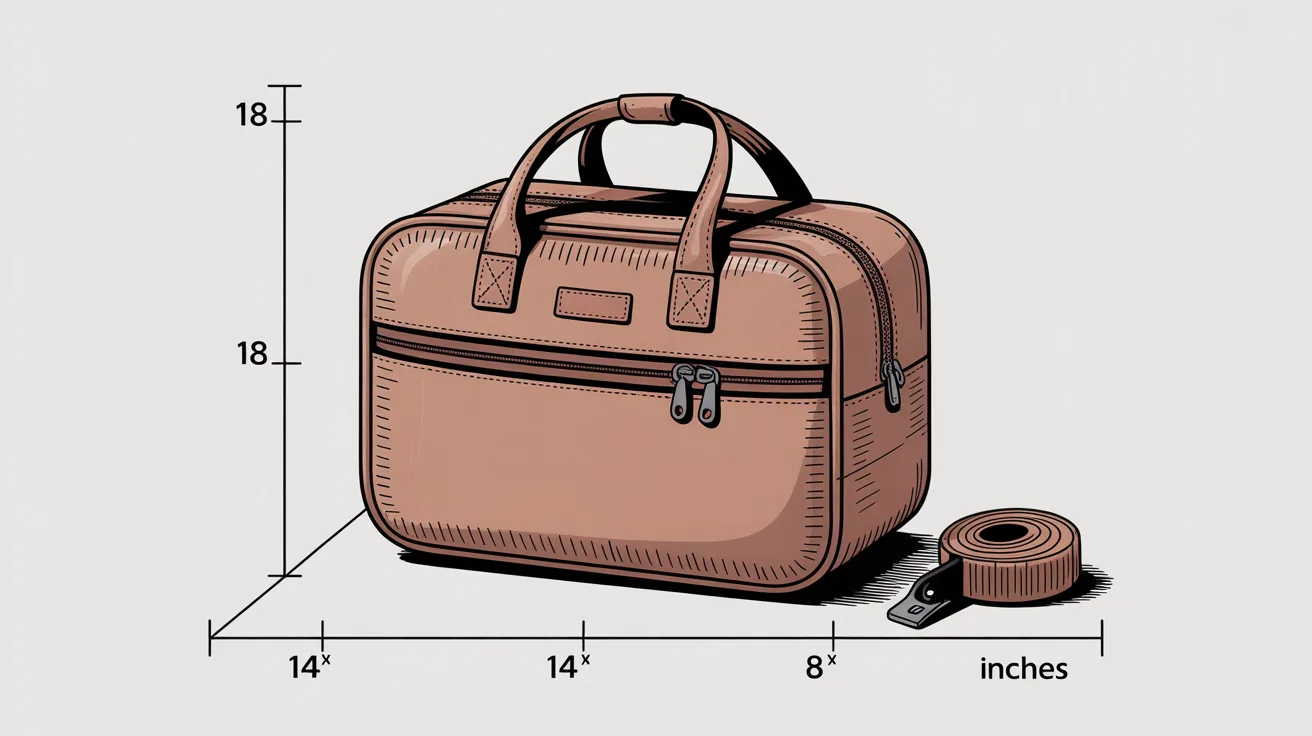
A personal item is the smaller bag that fits under the seat in front of you, and the most common limit on US airlines is 18 x 14 x 8 inches. United, Alaska and Southwest all publish smaller figures than that, and European budget carriers are smaller again. Every fare on every major airline includes one personal item free.
This is the allowance that matters most in 2026, because basic economy fares on several major carriers give you nothing else.
The Numbers by Airline
These are the published figures rather than what a given gate agent measures, but they are the numbers you will be held to if anyone checks.
There is no industry standard, and the variation is larger than people expect. A bag that slides under the seat on American can be refused on United, because United’s published depth and width are noticeably tighter.
| Airline | Personal item limit | Note |
|---|---|---|
| American, Delta | 18 x 14 x 8 inches | The most common figure |
| United | 17 x 10 x 9 inches | Narrower than most |
| Alaska | 17 x 13 x 6 inches | Shallowest of the major carriers |
| Southwest | Smaller than the 18 inch standard | Check current figure before flying |
| Spirit, Frontier | 18 x 14 x 8 inches | Free item, carry-on costs extra |
| Ryanair | Around 16 x 8 x 8 inches | Strictly enforced on every flight |
Treat these as a guide and confirm with your carrier, since airlines revise them and several changed figures during 2025 and 2026. Each airline publishes its own baggage and restricted item rules, and those pages are the only version that counts at the gate.
Why the Personal Item Now Matters More
A decade ago this was the bag nobody measured. Fare unbundling changed that, and for a growing share of passengers the under-seat bag is now the entire allowance.
Basic economy on American, Delta and United restricts domestic passengers to a personal item only, with no overhead carry-on included. On Spirit and Frontier the personal item is the free allowance and a cabin bag is a paid extra that costs more the later you buy it.
That has quietly turned the under-seat bag into the main bag for a lot of travellers, and it is why enforcement has tightened. Gate agents who once ignored a slightly large backpack now check both bags.
⚠️ Common Mistake to Avoid
The mistake is buying a backpack marketed as personal item sized and assuming that settles it. Manufacturers measure the bag empty and compressed, while gate agents see it packed and bulging, and the difference in depth is usually where it fails. A bag that measures correctly at home can be two inches deeper once it is full.
What Actually Fits Under a Seat
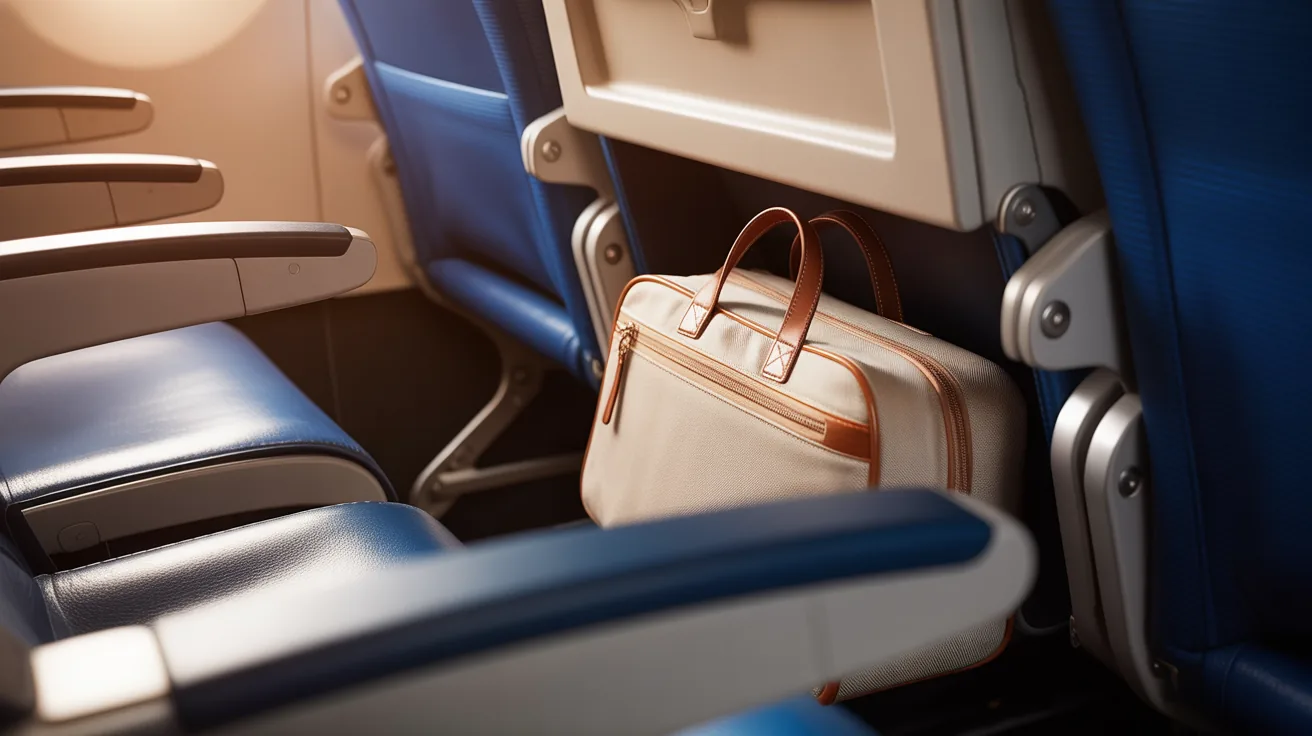
Published dimensions and physical reality are related but not identical, and the gap changes with the aircraft you happen to be on.
Weight is the other half of the question on international routes. US carriers rarely weigh cabin bags, while many airlines elsewhere apply a combined limit of 7 to 10 kilograms across both bags and do check, which carriers set out alongside their restricted item rules. A compliant bag full of books can still fail.
The physical constraint is the space between the seat legs, which is narrower than the published figures suggest on some aircraft and roomier on others. Bulkhead and exit rows often have no under-seat storage at all, so a personal item there has to go in a bin during takeoff and landing.
Aisle seats are slightly worse than window seats for under-seat room on many aircraft, because the seat leg and the entertainment box eat into the space differently across a row. It is rarely enough to matter, but it is enough that a bag which fits on the way out can be a struggle on the way back in a different seat.
A soft bag beats a rigid one for this reason. It compresses into an awkward space, and a gate agent assessing a soft backpack has more room for judgement than one looking at a hard shell case that clearly will not fit.
ℹ️ Good to Know
Several items do not count toward your allowance at all on most carriers, including a coat, an umbrella, food bought after security, and assistive devices such as a cane or crutches. Policies vary, so a carrier that counts your duty free bag as an item is doing something unusual rather than something normal. Airports publish separate hand baggage guidance covering what passes security, which is a different question again.
Packing the Personal Item Well
Whatever else you get wrong, this bag is the one that has to be right, because it is the only one guaranteed to stay with you from door to door.
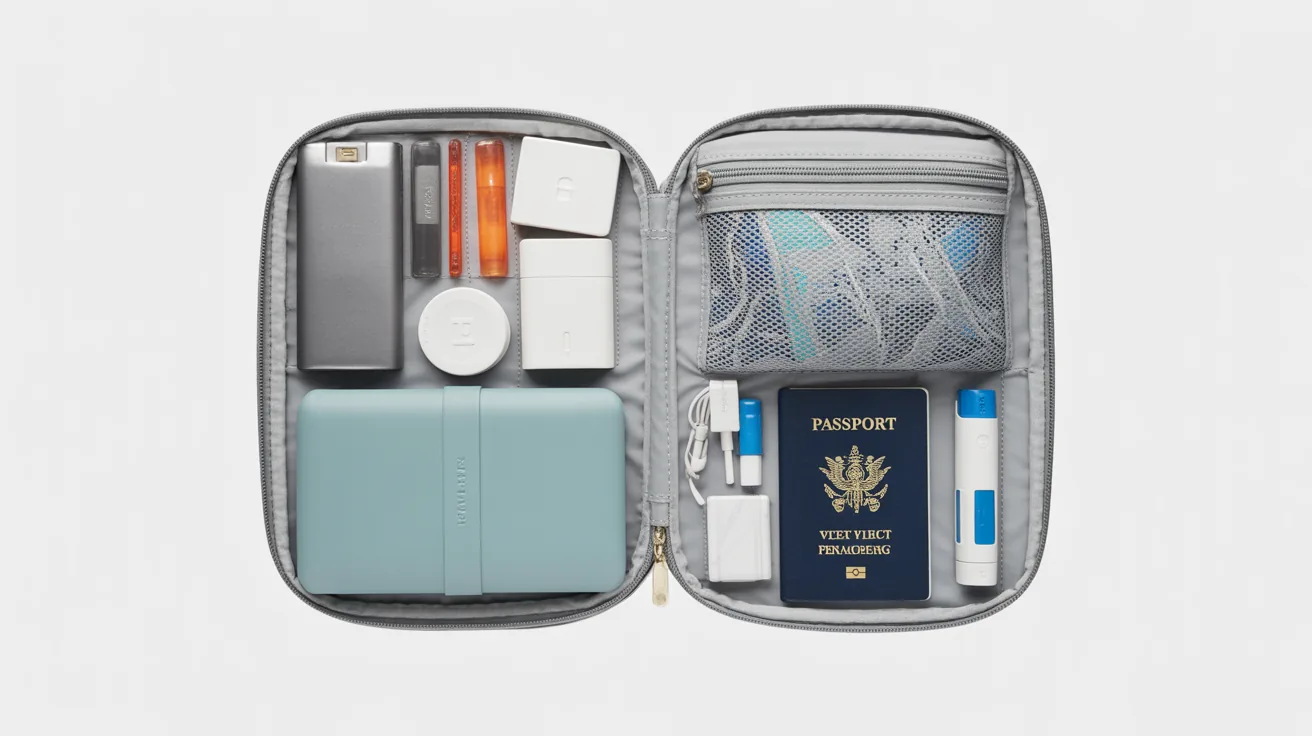
Treat it as the bag that has to work alone. Passport, medication, a change of underwear, chargers, a power bank and anything valuable belong here, because a gate checked cabin bag or a delayed suitcase leaves you with only this one.
Liquids go here too, in the outer pocket rather than the bottom, since the quart bag still has to come out at some checkpoints. Keeping it reachable is one of the small arrangements that removes friction at the lane rather than something you manage on the day.
💡 Pro Tip
Buy a bag that is deliberately smaller than the limit rather than exactly at it. A bag sized precisely to 18 x 14 x 8 inches fails the moment it is packed full, because soft sides bulge. One sized a couple of inches under passes every time, on every carrier, and you stop thinking about it. That certainty is worth more than the extra litre of capacity.
Compression is worth resisting here. A bag stuffed to bursting is the one that gets questioned, and the space you gain by forcing in one more item is rarely worth the attention it attracts at the gate. Leaving a little slack in the personal item is what keeps it invisible.
The other habit worth building is packing it the same way every time. A fixed layout means you know where the passport is without looking, and it makes the difference on the days when you are moving quickly, which is why a bag that is assembled once rather than repacked works better than a perfectly optimised one.
If you fly several carriers on one trip, pack for the smallest allowance on the route. A bag that clears Ryanair clears everything, and planning that in at the booking stage rather than the packing stage is what keeps it simple.
Airline baggage allowances differ by carrier, fare type and route, and several changed during 2025 and 2026. Confirm the current figures with your specific airline before you travel.
Wrapping Up
Your Next Step: measure the bag you already use, packed as you normally pack it, and compare it against the smallest allowance on your next itinerary rather than the most generous one. If it is over, that is worth knowing now rather than at a boarding gate, and a smaller bag costs far less than a gate fee on a budget carrier.

Leave a Comment