
Can You Bring Scissors in Carry On? The 4 Inch Blade Rule

You can bring scissors in carry on if the blades measure less than 4 inches from the pivot point. That covers most nail scissors, small first aid scissors and folding travel scissors. Anything longer belongs in checked baggage, where there is no length limit at all.
The measurement is the part people get wrong, and it is the reason a pair that looks perfectly reasonable gets taken while a larger looking pair passes.
How the Measurement Actually Works
Almost every dispute at a checkpoint comes down to this one detail, and it is measured differently from how most people assume.
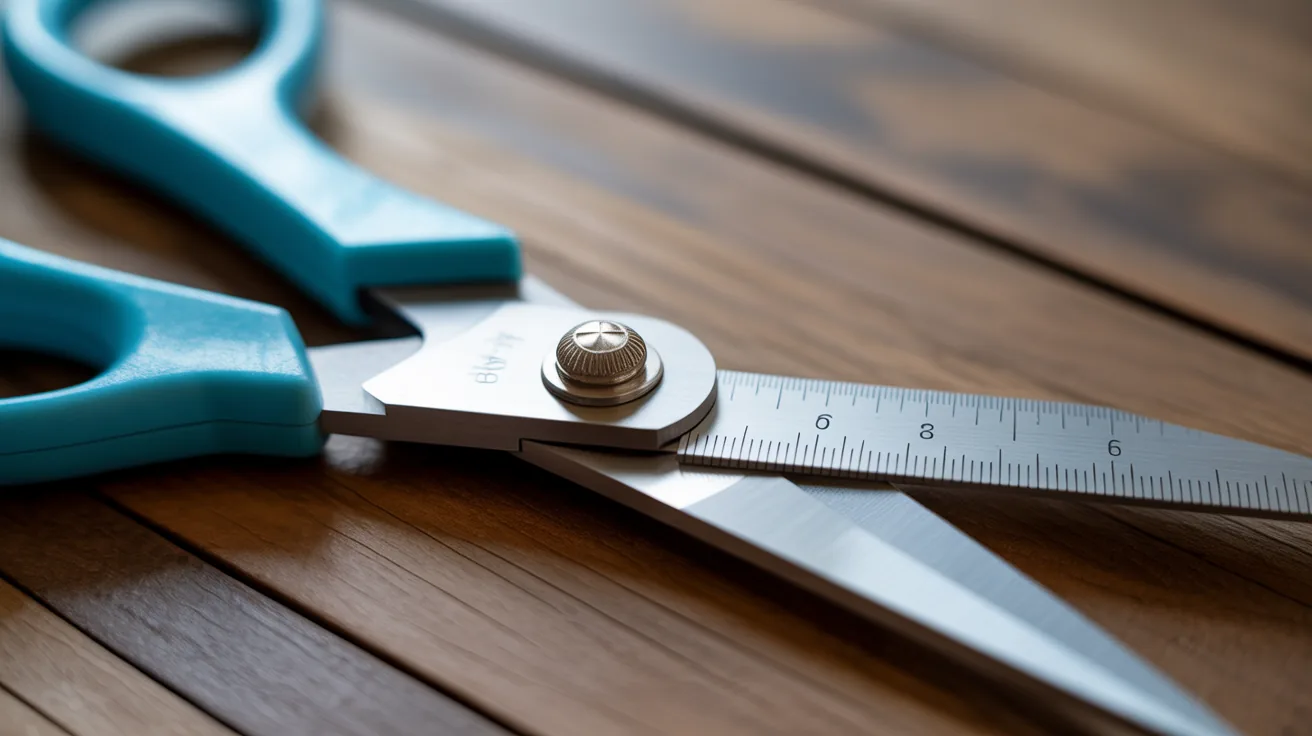
The 4 inches is measured from the pivot point to the tip, not the total length of the tool. The TSA states this specifically, and it changes the answer for a lot of scissors. A pair with long handles and short blades complies. A compact pair with long thin blades may not.
Pull out a ruler at home rather than arguing at the belt. The pivot is the screw or rivet where the two blades cross, and the measurement runs from there to the sharp end. If you land within a few millimetres of the limit, treat it as over, because the officer’s assessment is final and nobody wins a borderline case at a security lane.
| Type | Typical blade length | Carry-on |
|---|---|---|
| Nail and cuticle scissors | 1 to 2 inches | Allowed |
| First aid or trauma scissors | 2 to 3 inches | Allowed |
| Folding travel scissors | 1.5 to 2.5 inches | Allowed |
| Kitchen or craft scissors | 3.5 to 5 inches | Usually not allowed |
| Sewing or dressmaking shears | 5 to 8 inches | Not allowed |
| Barber and grooming shears | 3.5 to 6 inches | Usually not allowed |
Scissors in Checked Baggage
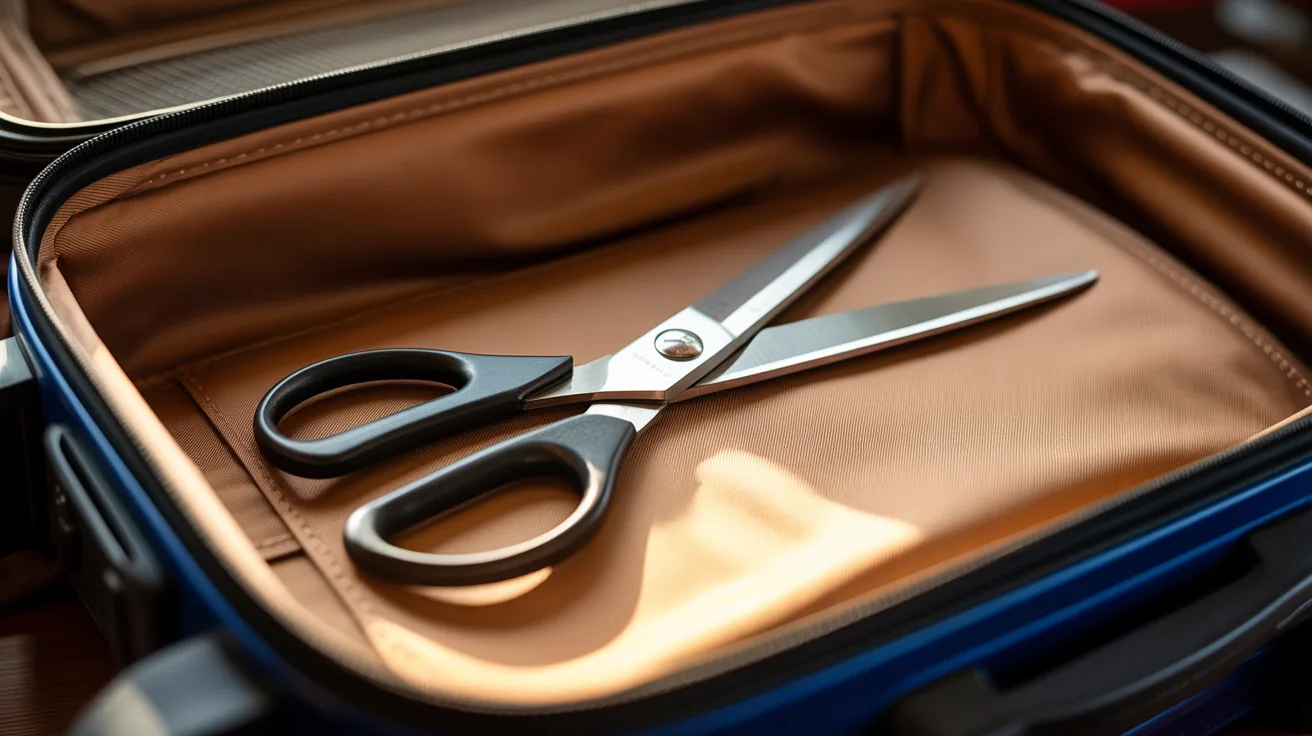
If the pair you want to travel with is over the limit, this is the whole solution, and it costs nothing beyond the bag fee you may already be paying. Nothing about scissors is restricted in the hold.
Worth knowing what the rule is protecting against. A short blade is difficult to use as a weapon and a long one is not, which is the entire logic. It has nothing to do with sharpness, and a blunt pair of long shears fails while a sharp pair of nail scissors passes.
The hold has no blade length restriction. Dressmaking shears, kitchen scissors and a full sewing kit all travel without a problem, and the only requirement is a duty of care. Sharp items must be sheathed or securely wrapped so a handler or inspector opening the case is not cut.
A rigid case beats tape, and it also stops the points working through a soft bag. If you are travelling with tools for work, a hard case is worth the space for that reason alone.
🔢 Quick Numbers
- 4 inches (about 10.2 cm) is the maximum blade length from the pivot point for carry-on scissors (TSA)
- No length limit applies to scissors in checked baggage, provided they are sheathed or wrapped (TSA)
- 3.4 ounces (100 ml) is the limit on any liquid travelling in the same toiletry bag, including antiseptic (TSA liquids rule)
The Tools That Travel Instead
There is one more category worth flagging. Scissors sold as part of a first aid kit are usually small enough to comply, and officers see them regularly in that context, so a proper kit rarely causes trouble. A loose pair rattling around the bottom of a bag is more likely to prompt a look than the same pair inside an obvious medical pouch.
If the scissors you need are over the limit and you are carrying no checked bag, a few substitutes cover most of what people actually use scissors for. Nail clippers handle nails without any restriction. A thread cutter, the small pendant style used by sewers, cuts thread and tags and has no exposed blade to object to.
A disposable razor covers cutting tape or a stubborn label in a pinch, and it clears security without question because the blade is enclosed. It is not elegant, but it is the tool most people already have in the wash bag.
For opening packaging, most travellers find they simply do not need a tool once they stop carrying one. It is one of those items that feels essential in a packing list and rarely gets used, which is worth remembering when you are deciding what actually earns a place in the bag.
💡 Pro Tip
If you are unsure whether a pair complies, put it in the checked bag rather than testing it. The scissors you would be sad to lose are almost always the ones that fail, because good scissors tend to have longer blades. Cheap folding travel scissors cost very little and clear every checkpoint, which makes them the sensible thing to carry if you genuinely need scissors on a trip.
Rules Outside the United States
This is the section that costs people scissors, because the outbound leg teaches the wrong lesson and the return leg applies a different rule.
The 4 inch standard belongs to the TSA and does not travel with you. This catches people on the return leg more than on departure, because the outbound experience sets an expectation the inbound airport never agreed to. Building slack into the return journey is worth as much as any packing decision. Several European and Asian airports measure in centimetres with a lower threshold, commonly 6 cm, and a few ban all scissors from the cabin regardless of blade length.
Hotel sewing kits are a small illustration of the difference. Many include a tiny pair of scissors that would clear a US checkpoint and be refused at an airport with a 6 cm threshold, which is why some hotels supply a thread cutter instead. Packing a kit assembled once and left alone avoids rediscovering this each trip.
UK airports publish their own hand baggage guidance and airlines maintain restricted item lists on top of national rules, so a pair that flew out with you can be refused on the return leg. On a multi country itinerary the safe assumption is the strictest rule on the route rather than the one at your first airport.
ℹ️ Good to Know
Scissors built into a multi tool are treated as the tool rather than as scissors, and multi tools with a blade are prohibited in the cabin whatever the scissor length. The same applies to folding knives with a scissor attachment. If your pocket tool has any cutting blade on it, it belongs in the hold, and the TSA answers this category of question in its general guidance.
Screening rules change and the officer at the checkpoint has the final decision. Confirm current guidance with your departure airport before flying with anything you would rather not lose.
Before You Book
The scissors question is a small illustration of something worth internalising about hand baggage. The rules are written around a physical property, in this case a cutting edge of a certain length, rather than around what an object is for. Once you start reading the list that way, most of it stops needing to be looked up, and the few genuine surprises are easier to spot in advance.

Leave a Comment