
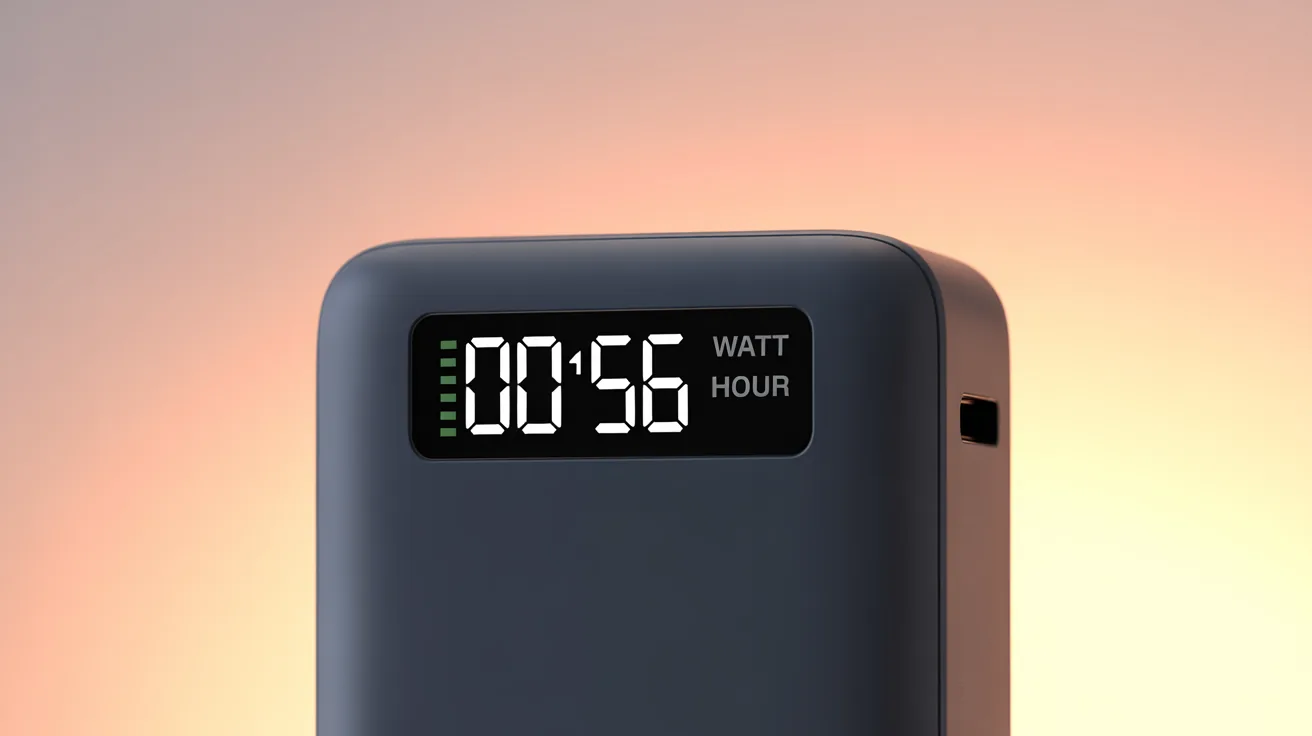
Can You Bring a Power Bank on a Plane? Watt Hour Limits Explained

You can bring a power bank on a plane, but only in the cabin, and the rules tightened sharply in 2026. Most airlines now allow two per passenger, cap capacity at 100 watt hours without approval, ban overhead bin storage, and prohibit charging in flight. Power banks have always been forbidden in checked baggage.
If you last checked these rules a year ago, at least three things have changed. This is the item where old habits now cost you the device at the gate.
What Changed in 2026
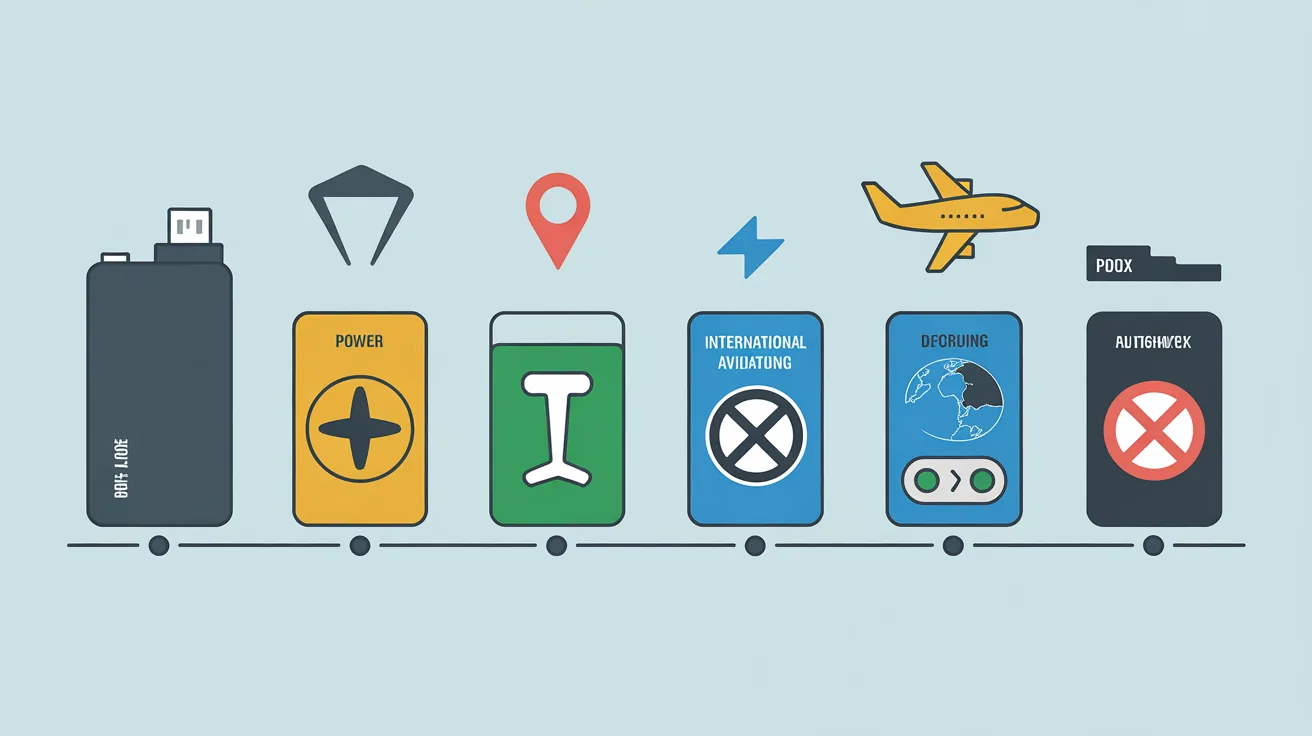
Lithium battery incidents on aircraft climbed steadily through 2024 and 2025, and the response arrived as a coordinated international standard rather than a patchwork. The International Civil Aviation Organisation introduced dedicated power bank provisions in March 2026, and carriers have adopted them on their own timetables through the year.
The headline changes are quantity, storage and use. Two power banks per passenger is now the common limit, they must stay in a seat pocket or under the seat rather than in an overhead bin, and charging them from an aircraft socket is prohibited. Several airlines have gone further and banned using them to charge anything at all in flight.
| Rule | Position in 2026 | Notes |
|---|---|---|
| Checked baggage | Prohibited | Unchanged, no exceptions |
| Quantity in cabin | Commonly two per passenger | Some carriers allow only one |
| Up to 100 Wh | Allowed | No approval needed |
| 100 to 160 Wh | Airline approval required | Usually a maximum of two |
| Over 160 Wh | Prohibited | Not carried on passenger aircraft |
| Overhead bin storage | Prohibited by most carriers | Seat pocket or under the seat |
| Charging in flight | Prohibited | Varies on whether you may use it at all |
Understanding Watt Hours
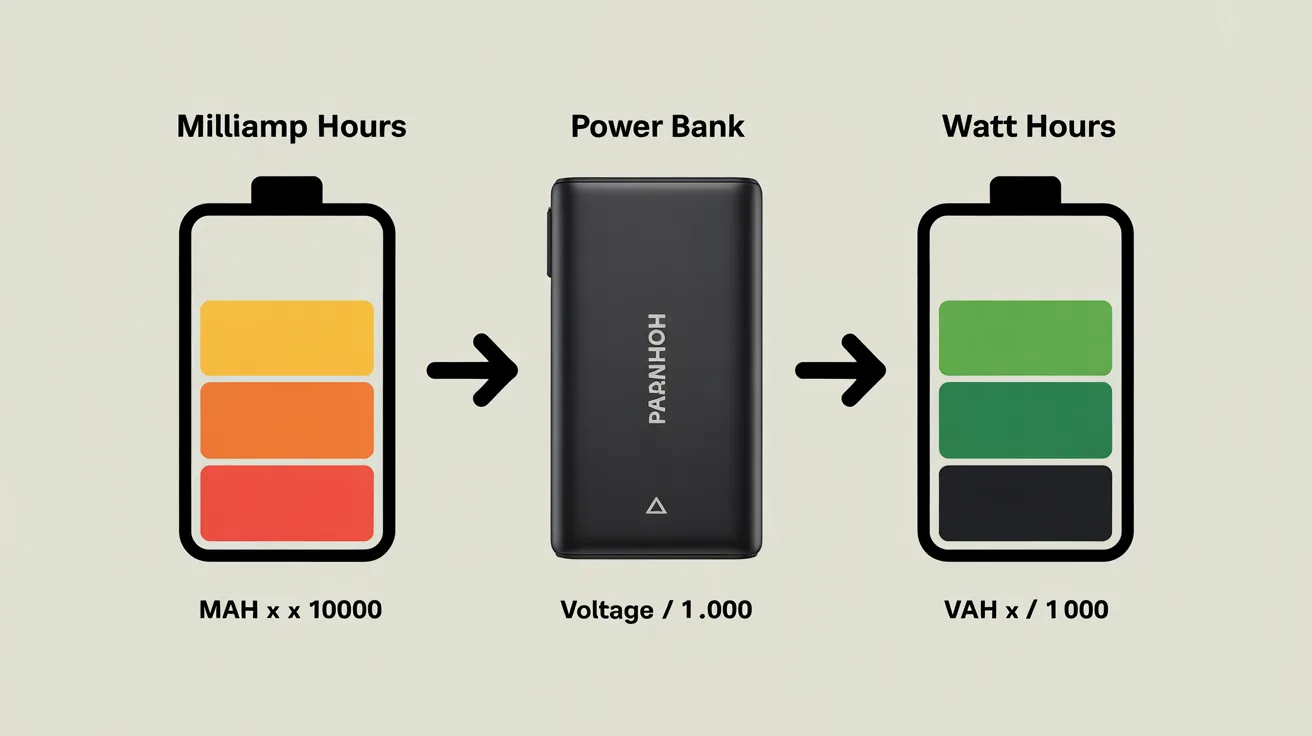
Airlines measure capacity in watt hours, and most power banks are labelled in milliamp hours, which is where the confusion starts and where most of the gate arguments come from. The conversion is straightforward: multiply the mAh figure by the voltage, usually 3.7 for a lithium cell, then divide by 1,000.
Worth doing once rather than guessing at a gate. A 20,000 mAh power bank works out at roughly 74 Wh, comfortably inside the standard limit. A 27,000 mAh unit sits close to 100 Wh, which is the practical ceiling for travelling without asking permission. The TSA allows up to two spare batteries between 101 and 160 watt hours with airline approval, and nothing above that.
🔢 Quick Numbers
- 100 watt hours is the capacity limit for a power bank carried without airline approval, and 160 Wh is the absolute ceiling (TSA)
- Two is the common per passenger limit in the cabin under the 2026 ICAO provisions, though some carriers allow only one (ICAO power bank provisions, 2026)
- Zero power banks or spare lithium batteries may be placed in checked baggage under any circumstances (TSA and FAA)
Why the Cabin and Not the Hold
A lithium cell in thermal runaway heats within seconds and can reach temperatures that ignite whatever is next to it. The FAA advises keeping devices with lithium batteries in carry-on baggage for the simple reason that cabin crew can reach a smoking bag and a cargo hold cannot be opened in flight.
The overhead bin restriction follows the same logic one step further. A battery failing inside a closed bin is discovered late, sometimes after smoke has spread. In a seat pocket it is seen immediately, which is the entire point of the rule rather than an inconvenience for its own sake.
Labels, Damaged Units and Confiscation
Two things get power banks taken away that have nothing to do with capacity limits, and both are avoidable with a minute of attention before you leave home.
Anyone who relies on a laptop and a phone through a long travel day feels these rules more than most, and working while moving between countries now means planning power around the aircraft rather than through it.
An unreadable capacity label is now a real risk. If the watt hour or milliamp hour figure cannot be read, staff cannot verify the unit, and an unverifiable power bank can be refused. Cheap unbranded units with worn printing are the usual casualties.
A capacity that has to be calculated manually also slows things down. If only the milliamp hour figure is printed, staff may work out the watt hours themselves, and an incomplete or unreadable label leaves them no basis to clear the device.
Swollen, damaged, recalled or visibly modified power banks are confiscated regardless of capacity, and rightly so. If yours has developed a bulge or gets hot in normal use, it should not be on an aircraft at all.
💡 Pro Tip
Photograph the capacity label before you travel and keep the image on your phone. It settles a gate conversation in seconds when the printing has worn off, which happens to any power bank carried in a bag for a couple of years. Frequent travellers also carry one good 20,000 mAh unit rather than several small ones, since the quantity limit now bites before the capacity limit does.
Airline by Airline Is Now the Rule
The international standard is a floor, not a ceiling, and carriers set stricter terms freely. This is the part that catches experienced travellers, because the rule that applied on the outbound leg may not apply on the return.
Charging habits are worth rethinking rather than working around. Charge everything fully before boarding, use the in-seat socket for your phone directly where one exists, and treat the power bank as an airport and destination tool rather than an in-flight one. A charging plan made before departure removes the problem instead of testing the rule.
Some allow one power bank rather than two. Some ban in-flight use entirely rather than just recharging. Japan directed all airlines operating to, from and within the country to prohibit in-flight use from April 2026, and that applies to every carrier on those routes rather than only Japanese ones.Airlines publish these terms on their own restricted items pages, and they have changed several times in a short period. Checking the specific carrier is now part of booking rather than part of packing, which is worth folding into how you compare flights in the first place.
ℹ️ Good to Know
If your cabin bag is gate checked because the bins are full, you must remove every power bank and spare lithium battery before handing it over. They are prohibited in the hold with no exception, and a gate checked bag goes into the hold. This is the single most common way a compliant traveller ends up breaking the rule, and the fix takes ten seconds if you know to do it.
Battery rules are set by aviation authorities and individual airlines and have changed repeatedly through 2025 and 2026. Confirm your carrier’s current power bank policy before you fly, particularly on international routes.
Where to Go From Here
Quick Recap:
- Power banks go in the cabin only and are never permitted in checked baggage.
- Keep capacity under 100 watt hours, roughly 27,000 mAh, to avoid needing approval.
- Store it in a seat pocket or under the seat, not in the overhead bin.
- Assume you cannot recharge it in flight, and check your airline for whether you may use it at all.

Leave a Comment