
Can You Bring Sunscreen in Carry On? Liquid, Stick and Powder

You can bring sunscreen in carry on if the container holds 3.4 ounces (100 ml) or less and fits in your quart bag. Stick sunscreen is a solid, so it has no volume limit and does not need to go in the bag at all. Powder sunscreen is unrestricted below 12 ounces.
Sunscreen is the single most confiscated item in this category, and almost always for the same reason: a full size bottle bought for a beach holiday, packed in the cabin bag, and surrendered at the lane.
Lotion, Spray, Stick and Powder
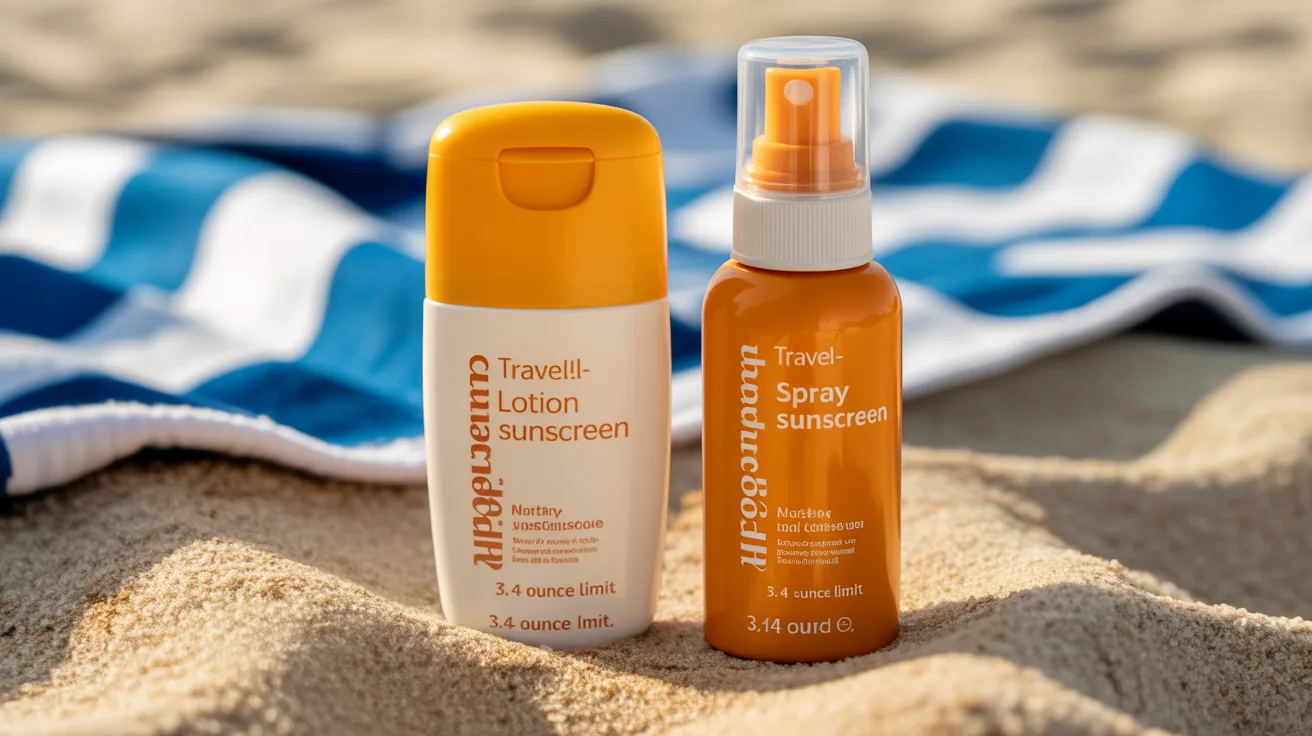
Sunscreen exists in four different physical forms and the rules treat each one differently, which is why a straight yes or no answer never fits the question.
The form decides the rule, not the product. Lotion and spray sunscreen are liquids and follow the 3.4 ounce limit. Stick sunscreen is a solid and sits outside the liquids rule entirely, in the same way a bar of soap does.
After sun products follow the same logic. Aloe gel is a gel and lives in the quart bag, while an after sun stick or balm does not. Anyone packing for a beach trip usually has both, and sorting them by form rather than by purpose is what stops the bag being full before the sunscreen goes in.
Aerosol sunscreen adds one condition on top of the size limit. The nozzle must be protected by a cap or another means of preventing accidental release, which matters more in a bag being handled than at the checkpoint itself.
| Type | Category | Carry-on rule |
|---|---|---|
| Lotion sunscreen | Liquid | 3.4 oz (100 ml) or less |
| Spray or aerosol sunscreen | Aerosol | 3.4 oz (100 ml) or less, cap on |
| Stick sunscreen | Solid | No volume limit |
| Powder sunscreen or mineral powder | Powder | No limit under 12 oz (350 ml) |
| After sun lotion and aloe gel | Liquid or gel | 3.4 oz (100 ml) or less |
| Sunscreen in checked bag | Any | Within FAA toiletry limits |
The Full Size Bottle Problem
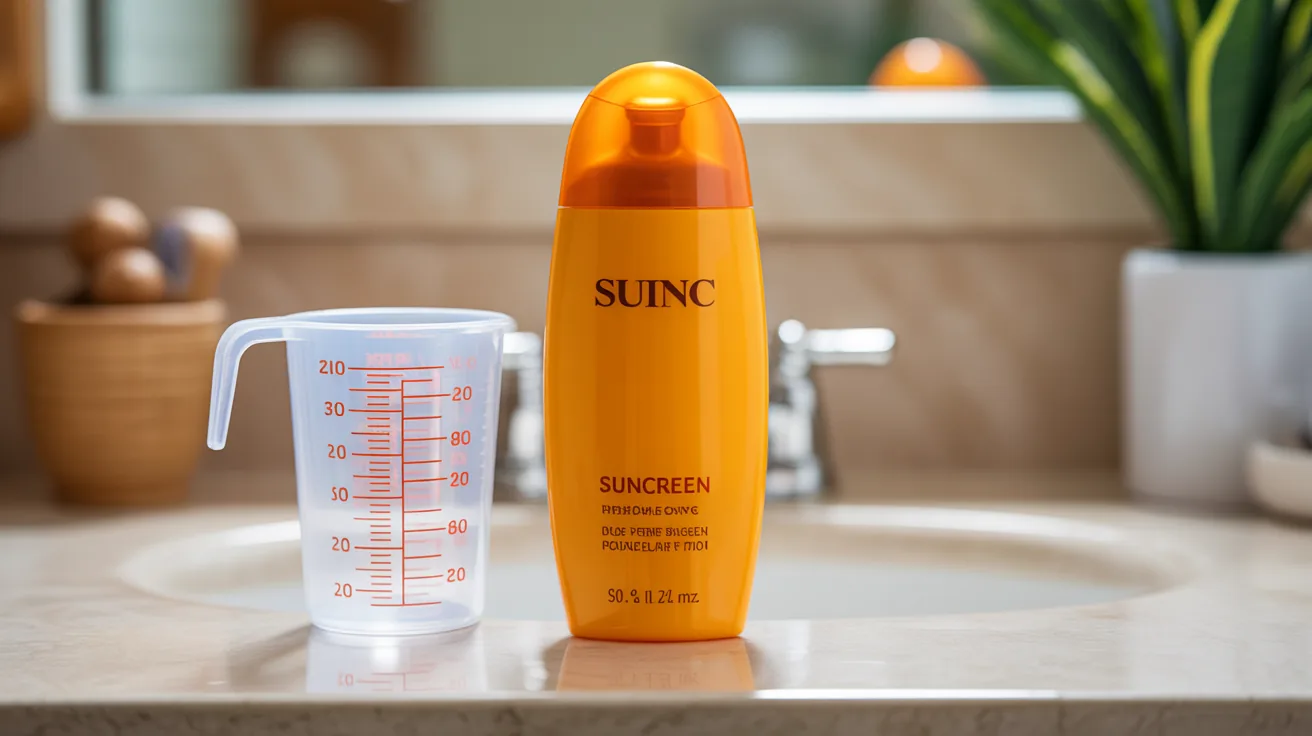
This is the specific scenario behind most sunscreen confiscations, and it is worth naming because almost everyone has done it at least once.
Dermatologists generally recommend applying far more sunscreen than people actually use, which is another reason a travel size bottle runs out faster than expected on a beach trip. Planning for the amount you should use rather than the amount you normally use changes the answer about what to pack.
A standard bottle of sunscreen is 150 to 200 ml, which is comfortably over the limit, and it is usually the most expensive single item in a wash bag. The combination is why so many are lost.
There is a second cost people miss. Running out of sunscreen mid trip and buying it at a resort shop or an airport is where the real money goes, so the plan matters more than the packing. Deciding in advance is one of those small preparations that quietly saves money.
Three routes solve it. Put the full size bottle in a checked bag, decant into travel bottles, or buy sunscreen at your destination. The third option is worth more consideration than it usually gets: a bottle bought in a beach town costs a fraction of the airport price, and you will use it up rather than carrying it home.
⚠️ Common Mistake to Avoid
The costly version of this mistake is buying sunscreen in advance because it is cheaper at home, then packing it in the cabin bag out of habit. You pay the higher price twice, once at home and once airside when you replace it. If you are travelling carry-on only, buy it at the destination and accept that this is simply what sunscreen costs.
Sunscreen in Checked Baggage
Putting the big bottle in the hold is the obvious answer for anyone checking a bag, and it works for almost everyone. There is one limit worth knowing about first.
The hold removes the 3.4 ounce limit and applies the FAA’s toiletry allowance instead. Sunscreen counts as a medicinal and toiletry article, capped at 500 ml per container with a 2 litre total per person across all toiletries including aerosols.
Reef safe and mineral formulations are worth a separate thought, since several destinations including parts of Hawaii, Mexico and Palau restrict sunscreens containing certain chemical filters. That is a destination rule rather than an aviation one, but it affects what is worth packing, and buying locally in those places usually solves it automatically.
A family packing several bottles for a two week beach trip can approach that total, particularly with aerosol cans in the mix. It is worth a quick count rather than an assumption, and the FAA publishes a printable chart covering the whole category.
Buying at the Destination
For a beach trip this is often the better plan outright rather than a fallback, though it depends more on where you are going than on what you are willing to spend.
Availability is the thing to check rather than price. Sunscreen is easy to find in coastal and tourist areas almost everywhere, and harder to find inland, out of season, or in countries where the market is small. High SPF and mineral formulations are less widely stocked than standard ones.
Regulations differ too, which surprises people. Formulations approved in one country are not always sold in another, and SPF labelling standards vary, so the product you know may not exist at your destination under the same name. If a specific brand matters to you, treat it as luggage rather than shopping, and build it into the standard kit rather than deciding each trip.
Skin type matters here too. If you rely on a specific formulation for sensitive skin or a medical reason, treat it as something to bring rather than something to buy, and put the full size bottle in the hold. For everyone else, buying locally is usually the cheaper and simpler answer and it removes the packing decision entirely.
💡 Pro Tip
Keep a stick sunscreen in your personal item regardless of what else you pack. It weighs almost nothing, it never counts against the liquids allowance, and it covers face, ears and the back of your neck on the day your checked bag is delayed. Travellers who have spent a first beach day sunburnt while waiting for a suitcase tend to adopt this permanently.
ℹ️ Good to Know
Sunscreen counts toward the liquids allowance everywhere, but the bag itself differs by region. UK and EU airports have traditionally required a transparent resealable bag no larger than 20 by 20 cm holding a litre in total, slightly tighter than the US quart. Some UK airports have now lifted the container limit to 2 litres after upgrading their scanners, though most of the world has not.
Security rules differ by country and change over time, and the officer at the checkpoint has the final say. Confirm current guidance with your departure airport before you pack.
Where to Go From Here
Your Next Step: before your next trip, decide which of the three routes you are taking rather than leaving it to the morning of the flight. Either the big bottle goes in a checked bag, or you decant into a 100 ml travel bottle now, or you accept you are buying sunscreen on arrival and leave it off the packing list entirely.

Leave a Comment