
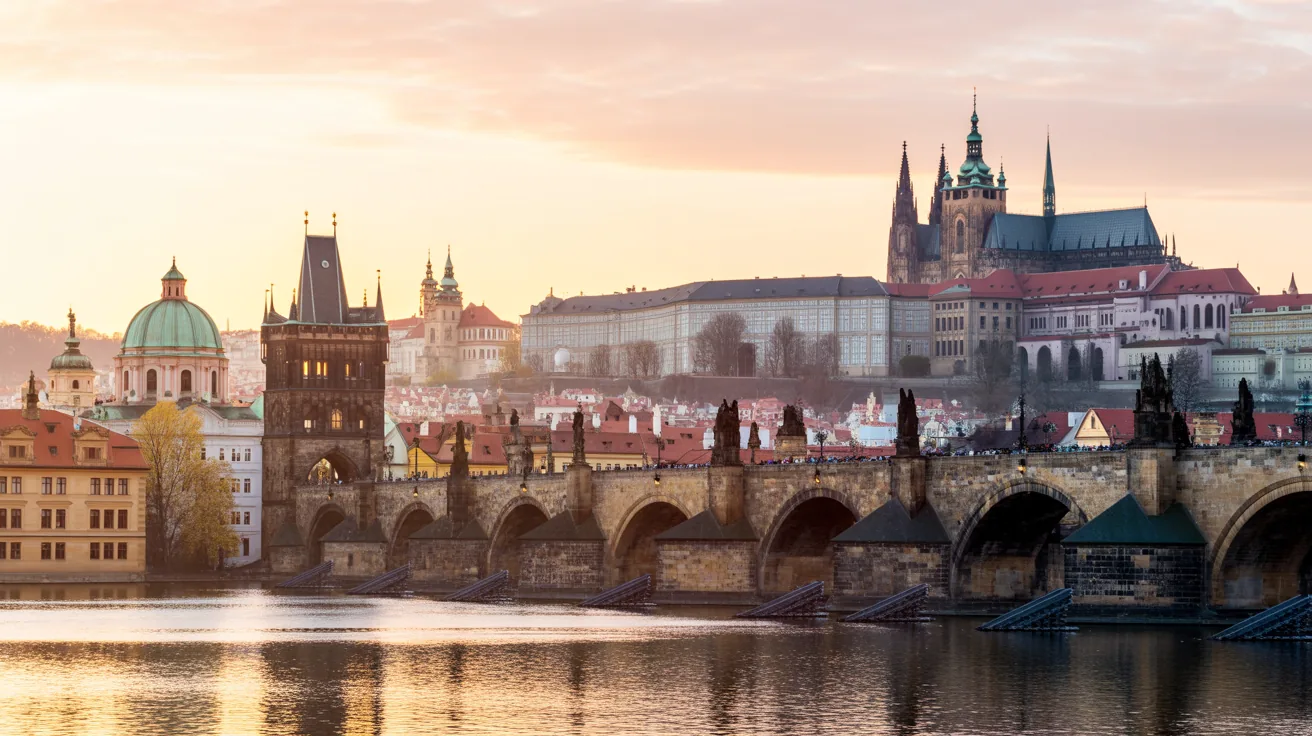
How Many Days in Prague Is Enough?

Three days is right for Prague. Two covers the castle and the old town at a brisk pace, three lets you see them properly and add a neighbourhood, and four is worth it only if you want a day trip or a slower rhythm. Prague is compact, walkable and one of the better value capitals in Europe.
The city is small enough that the constraint is crowds rather than distance. Everything worth seeing sits within about three kilometres, and the difference between a good visit and a frustrating one is largely about timing.
What Three Days Covers
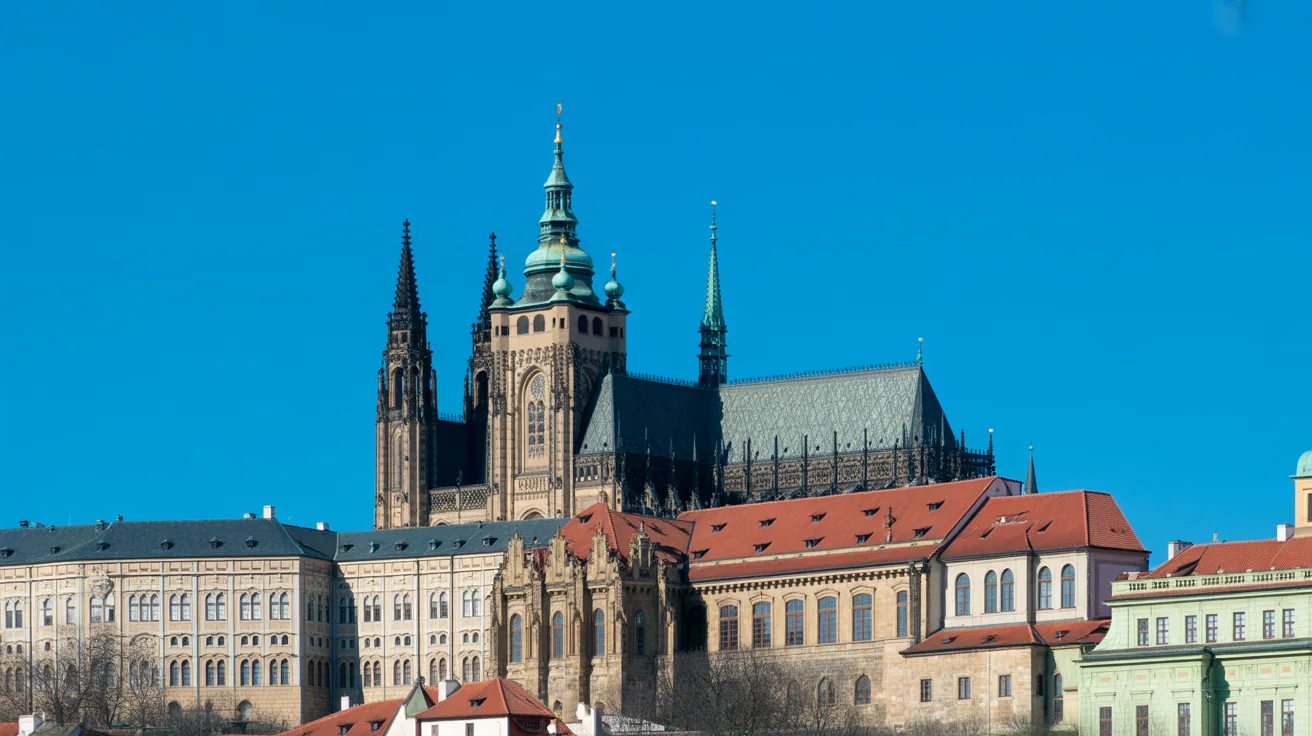
The three days divide neatly by geography, and each one ends within walking distance of dinner, which is part of why Prague works so well as a short trip. Anyone who prefers a trip that does not need constant logistics will find it unusually easy.
Day one is the castle complex, and it takes longer than people expect. Prague Castle is not a single building but a walled district containing St Vitus Cathedral, the Old Royal Palace, Golden Lane and several courtyards, and doing it properly is four hours before you walk back down.
Day two is the Old Town, Charles Bridge and the Jewish Quarter, and the Jewish Quarter in particular deserves more time than most itineraries give it. Its six surviving synagogues and the old cemetery are ticketed together and take a full morning if you read anything at all. Day three is Mala Strana, Petrin Hill and Vysehrad, which is where the city stops feeling like a set piece and starts feeling like a place people live.
| Trip length | What fits | Verdict |
|---|---|---|
| 1 day | Old Town and Charles Bridge | A stopover |
| 2 days | Castle plus Old Town | Workable, rushed |
| 3 days | Above plus Mala Strana and Vysehrad | The right answer |
| 4 days | Above plus a day trip | Comfortable |
| 5 days or more | Neighbourhoods, galleries, slower pace | For returning visitors |
The Crowd Problem and How to Beat It
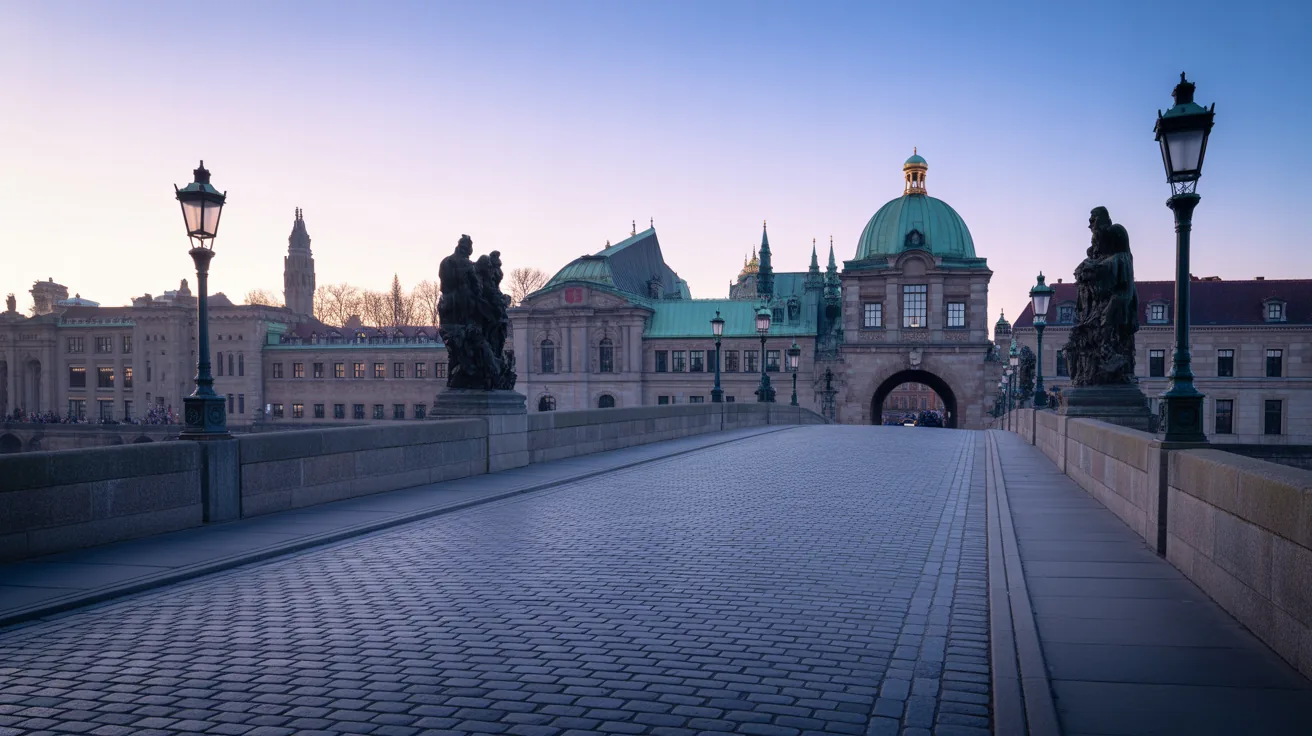
Prague receives visitor numbers out of proportion to its size, and almost all of them go to the same half dozen places at the same time of day.
Charles Bridge between ten and six is a slow moving crowd rather than a bridge. At seven in the morning it is nearly empty and the light is better. The same is true of the Astronomical Clock, the castle courtyards and the Old Town Square.
Prague rewards early starts more than almost any European city, because the day tripper and coach tour pattern is unusually concentrated. Being out by eight and taking a long break in the middle of the day is a better structure than trying to see things efficiently between eleven and four.
🔢 Quick Numbers
- About 3 kilometres separates the castle from Vysehrad, which covers almost everything a visitor wants to see
- 4 hours is a realistic allowance for the castle complex, which is a walled district rather than a single building
- 3 days is the length at which the city stops feeling rushed without starting to repeat itself
📍 Real-World Example
A three day plan built around the crowds rather than around the map: day one, walk up to the castle for opening at nine, work down through Mala Strana by early afternoon, then rest before an evening walk across Charles Bridge when the coaches have gone. Day two, Old Town Square and the Jewish Quarter early, a long lunch, then the riverbank and Kampa island in the late afternoon. Day three, Vysehrad in the morning for the views and the cemetery, then Vinohrady or Zizkov in the afternoon for beer halls that are not aimed at visitors. The pattern is early and late, with the middle of the day spent doing something unhurried.
What Prague Costs
The value is real but it is not uniform, and the gap between the tourist core and everywhere else is wider here than in most European capitals.
Prague remains meaningfully cheaper than western European capitals, though less so than its reputation suggests. Accommodation, food and beer are all noticeably below Paris or Amsterdam levels, and the difference is largest outside the tourist core.
Food is where the difference shows most clearly. A restaurant on Old Town Square and one three streets away can differ by a factor of two for the same dish, and the further one is usually better. Prague has a real dining scene that has almost nothing to do with the goulash sold to visitors.
The specific trap is currency exchange. Prague has an unusually aggressive exchange booth industry in the centre, with rates that can be far worse than the real one, and the sensible approach is to use a card or withdraw from a bank machine rather than exchanging cash on the street. Anyone paying attention to what a trip actually costs will save more here than anywhere else in the itinerary.
ℹ️ Good to Know
The Czech Republic is in the Schengen area but not the eurozone, so you pay in Czech crowns rather than euros, and merchants offering to charge you in euros are usually applying a poor conversion rate. Non-EU visitors are also now registered biometrically on first entry to Schengen, and the EU has published how the Entry/Exit system works, which has lengthened arrival queues at some airports.
Day Trips Worth Taking
Prague is well positioned for day trips because the rail network is good and the distances are short, but the city itself is interesting enough that the fourth day is not obviously better spent outside it. This is a genuine judgment call rather than a recommendation.
Kutna Hora is the standard option, about an hour by train, combining a Gothic cathedral with the bone chapel at Sedlec. Cesky Krumlov is more beautiful and further, at around three hours each way, which makes it a long day rather than a comfortable one. It works better as an overnight stop on the way to Austria than as a day trip from Prague.
Both are comfortable as a single day and neither needs an organised tour, since the trains are frequent and the sites are walkable from the stations.
Terezin, the former ghetto and concentration camp, is an hour north and is a serious rather than a scenic visit. If you go, allow the full day and do not attempt to combine it with anything else, which is the kind of planning decision worth making in advance. Airlines serving Prague publish their own baggage guidance if you are connecting through another European hub, and the larger transfer airports set out their own rules for anyone routing through London.
Prices, opening hours and entry requirements change. Check each site’s official information and the current Schengen rules for your nationality before travelling.
Putting It All Together
Quick Recap:
- Three days is the right length: castle, Old Town, then the quieter neighbourhoods.
- Allow four hours for the castle complex rather than treating it as one building.
- Start early and rest in the middle of the day, because the crowds are concentrated.
- Use cards or bank machines rather than street exchange booths.
- Add a fourth day only if you want Kutna Hora or Terezin properly.

Leave a Comment