
Can You Bring Tweezers on a Plane? Rules for Grooming Tools

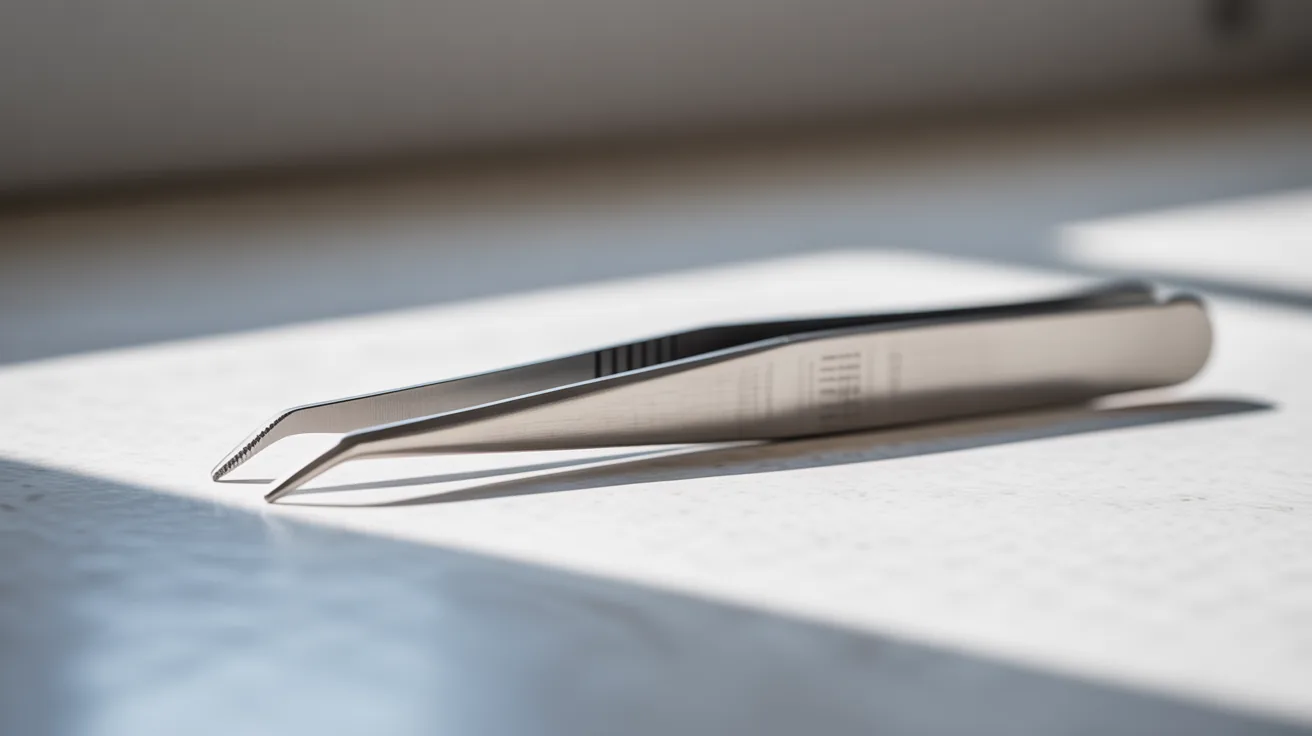
Yes, you can bring tweezers on a plane. Tweezers are permitted in both carry-on and checked baggage at US airports with no size restriction, and they do not need to be declared or removed from your bag. They are one of the least contested items in a wash kit.
The doubt persists because tweezers are pointed and metal, which sounds like the kind of thing security would object to. In practice the objection has never existed.
What follows is mostly about the tools sitting next to them in the same pouch, because that is where the actual restrictions live.
Why People Think Tweezers Are Banned
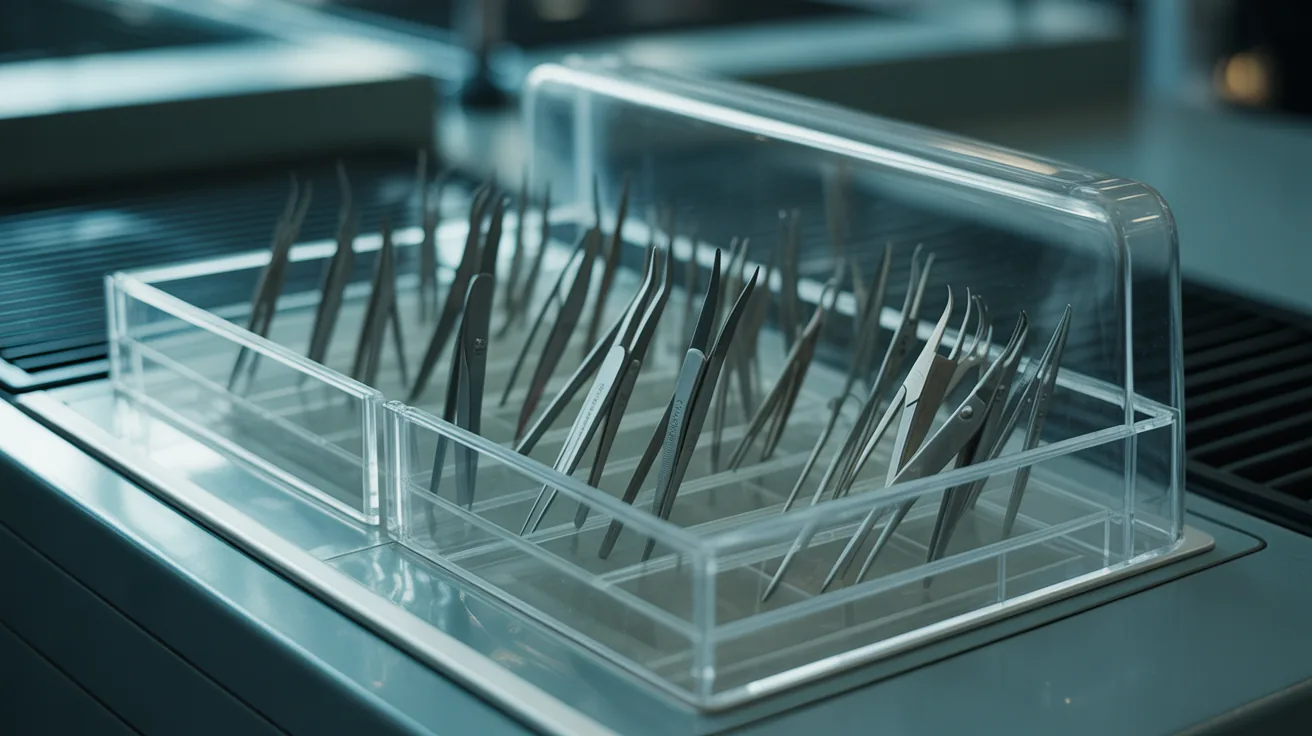
The confusion dates to the period after September 2001, when checkpoint discretion was wide and a great many grooming items were taken from passengers. Tweezers, nail clippers and small scissors were confiscated inconsistently, and the memory outlasted the practice.
Tweezers have never appeared on the prohibited items list. They sit alongside nail files, cuticle pushers and eyebrow razors in the group of grooming tools that pass without comment.
| Tool | Carry-on | Checked bag |
|---|---|---|
| Standard tweezers, any tip shape | Allowed | Allowed |
| Nail clippers with attached file | Allowed | Allowed |
| Nail scissors, blade under 4 inches | Allowed | Allowed, wrap the tips |
| Scissors, blade over 4 inches | Not allowed | Allowed, wrap the tips |
| Eyebrow razor with enclosed blade | Allowed | Allowed |
| Loose razor blades or a straight razor | Not allowed | Allowed, sheathed |
The Tools That Do Have Limits
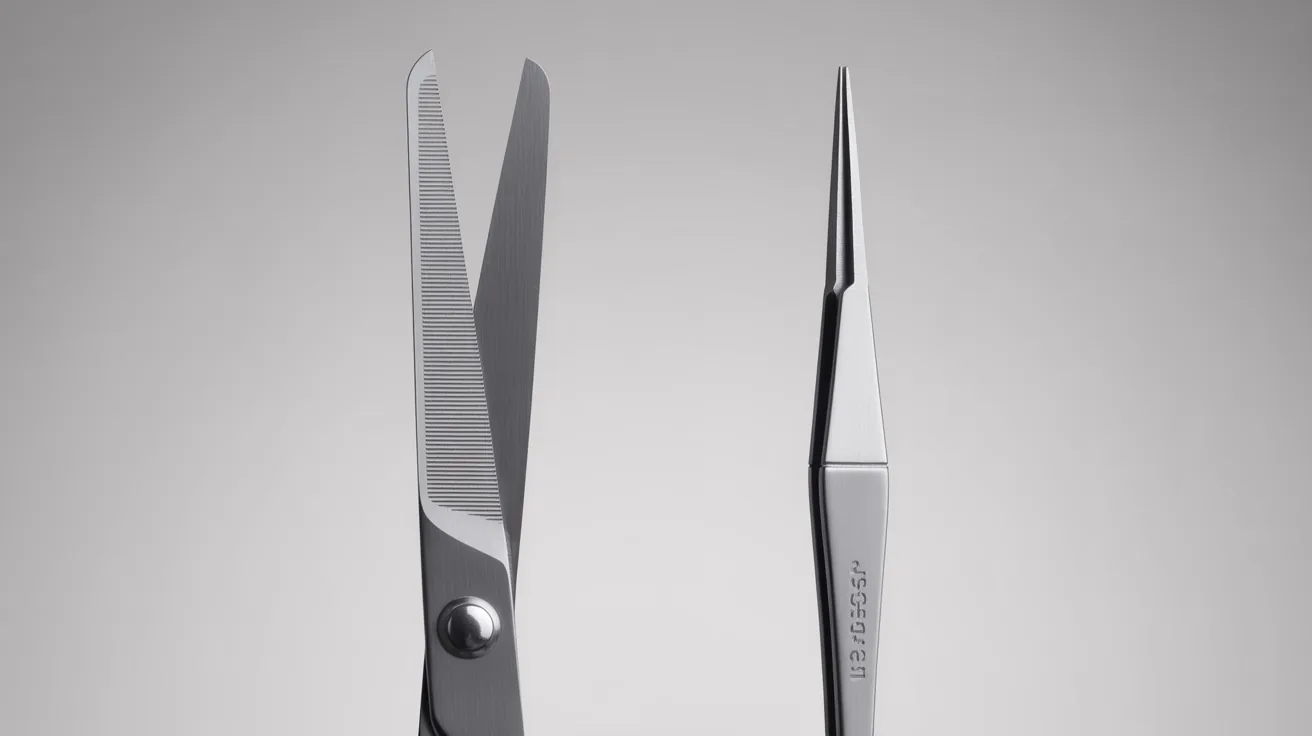
The restriction that catches people is on blades, not points.
This is the part worth reading twice, because it is where a bag actually gets stopped. A pointed tool is not a problem. A cutting edge over a certain length is, and the two get conflated constantly by people trying to work out what to pack.
The measurement itself is the detail most often misread, and it is worth checking at home rather than discovering it during the part of the trip with the least slack. Scissors must measure less than 4 inches from the pivot point to the tip to travel in carry-on baggage, and the measurement runs from where the blades cross rather than from the end of the handles.
Most nail scissors clear that comfortably. Barber shears and craft scissors usually do not. Loose double edge razor blades are the other common casualty, since they are prohibited in the cabin regardless of what they are packed inside.
⚠️ Common Mistake to Avoid
The mistake is not the tweezers, it is what they share a pouch with. A zipped manicure set often holds long cuticle nippers, a folding blade or a pair of shears that clears 4 inches, and the whole case reads as one dense metal cluster on the scanner. The bag gets pulled, the case gets opened, and the item that fails is never the one you were worried about.
Tweezers in Checked Luggage
Checking them is always an option and it is the one to take if the pair has any real value to you.
The hold has no restriction on tweezers whatsoever, and there is no scenario in which a pair is refused there. The only requirement that applies to grooming tools there is a duty of care: anything sharp should be sheathed or securely wrapped so a baggage handler or inspector opening the case is not cut.
Tweezers are blunt enough that the requirement rarely applies to them specifically, but if they travel in a case with scissors or blades, wrap the case rather than the individual items. A rigid pouch does the job and stops small metal tools scattering through a suitcase. It also means the whole kit can be lifted out in one motion if a bag does get opened, which turns an inspection into a short one. Travellers who keep grooming tools in a fixed pouch that never gets unpacked avoid the question entirely.
Precision Tweezers, Splinter Kits and First Aid
The one situation worth planning for is a pair you would be sorry to lose. Good tweezers are a genuine tool rather than a commodity, and while the odds of confiscation are close to zero, officer discretion means they are never exactly zero. If yours cost more than a meal out, the hold removes even that small risk.
Sharp point precision tweezers, the kind sold for splinter removal, are treated the same as ordinary slanted tweezers. So are the tweezers built into a first aid kit, which is worth knowing because a compact travel first aid kit is one of the more useful things to keep in a carry-on rather than a checked bag.
Slant tip, point tip and flat tip all fall in the same category, and no aviation authority distinguishes between them. Ingrown hair tweezers with a needle sharp point are the version people worry about most, and they clear screening as readily as any other pair.
Where a first aid kit can cause a delay is elsewhere in the contents. Small scissors need to meet the blade rule, antiseptic liquids fall under the 3.4 ounce limit, and a scalpel or disposable blade belongs in the hold. Checking the kit once before a long trip saves the conversation.
💡 Pro Tip
Keep tweezers in the clear toiletry pouch you already take out for liquids rather than loose in a bag. Officers are looking inside that pouch anyway, so the metal is identified in the same glance instead of prompting a second pass. It costs nothing and it is the single reason some travellers never get their bag opened for grooming tools.
Rules in Other Countries
Tweezers clear security almost everywhere, and no major aviation authority lists them as prohibited. What changes abroad is the blade threshold sitting next to them. Several European and Asian airports measure scissors in centimetres with a stricter cut off than the US 4 inch rule, and a few ban all scissors from the cabin regardless of size.
The practical consequence is that a grooming kit assembled for a US departure can lose an item on the way home. It is a small loss, but it is avoidable and it happens to people who assumed one rule applied everywhere.
UK airports publish their own hand baggage guidance and airlines maintain restricted item lists on top of it, so a tool that flew out with you can be refused on the way back. Tweezers themselves are the safe constant, which is a reasonable argument for making them the sharp-ish tool you carry and leaving the scissors in the hold.
ℹ️ Good to Know
The officer at the checkpoint has the final decision on any item, and the TSA states this openly rather than as a caveat. In practice that discretion is almost never exercised against tweezers, but it does mean no answer is absolute. If you would be genuinely upset to lose a particular pair, the hold is free and takes the question away entirely.
Screening rules differ by country and change over time, and the final decision rests with the officer at the checkpoint. Check your departure airport’s guidance before flying with grooming tools you would rather not lose.

Leave a Comment