
How Many Days in Venice Is Enough?

Two full days is enough for Venice itself, and three lets you add the lagoon islands without rushing. One day is possible and expensive, because the city now charges day visitors an access fee on peak dates. Staying overnight is both a better experience and, on those dates, the cheaper option.
Venice is small enough to walk end to end in an hour, which misleads people into booking a day trip. The city’s value is in the hours when the day visitors have gone.
Why Two Nights Beats One Long Day
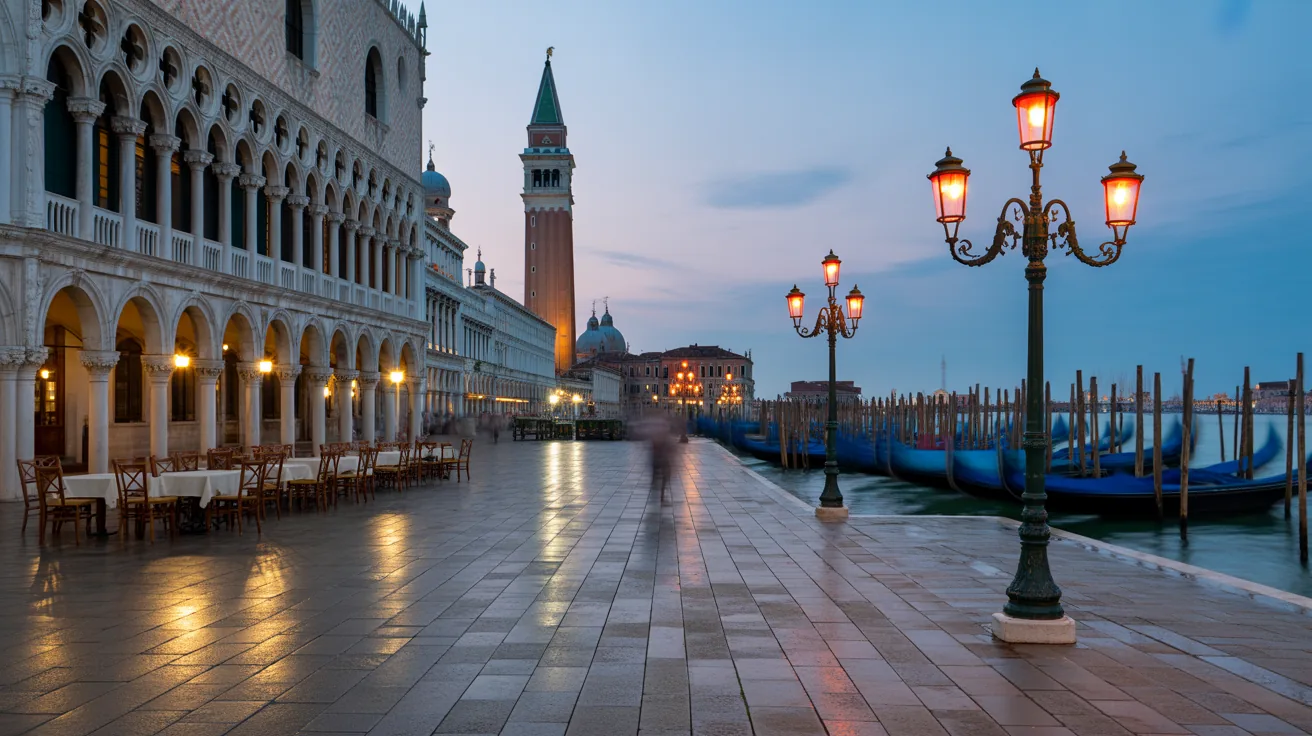
Venice empties in the evening and it is a different city after six. The crowds around San Marco and the Rialto thin dramatically, the light on the water is at its best, and the restaurants that locals use start filling. A day tripper never sees any of this.
Two nights gives you two evenings and one full day, which covers San Marco, the Doge’s Palace, the Rialto, and enough wandering through Dorsoduro and Cannaregio to understand how the city fits together. Three nights adds Murano, Burano and Torcello as a proper day rather than a rushed afternoon.
| Trip length | What fits | Verdict |
|---|---|---|
| Day trip | San Marco and Rialto in a crowd | Possible, not recommended |
| 1 night | The core, plus one good evening | Better than a day trip |
| 2 nights | The city properly, two evenings | The practical answer |
| 3 nights | Above plus the lagoon islands | Ideal |
| 4 nights or more | Galleries, quiet sestieri, Lido | For a second visit |
The Access Fee, and How It Changes the Maths
Venice is the first major European city to charge visitors for entering rather than for staying, and the mechanics matter because the penalties are real.
Venice charges day visitors an access fee on selected peak dates, and 2026 has around 60 of them running from 3 April to 26 July, mostly Friday to Sunday. The City of Venice publishes the calendar and the payment portal officially, and the charge applies between 8:30 and 16:00 to the historic centre only, not to Murano, Burano, Lido or the other lagoon islands.
The pricing rewards planning. Booking at least four days ahead costs 5 euros, while booking within the three days before your visit costs 10. Under 14s are exempt.
The part that catches people is the exemption. Overnight guests do not pay the access fee, but they still have to register in advance to obtain an exemption QR code, and the city’s own FAQ makes clear that a hotel booking confirmation is not sufficient on its own. Fines for being unable to produce either a payment or an exemption run into the hundreds of euros.
🔢 Quick Numbers
- Around 60 dates between 3 April and 26 July 2026 carry the access fee, applying from 8:30 to 16:00 (City of Venice)
- 5 euros if you book at least four days ahead, 10 euros if you book within three days of your visit (City of Venice)
- Overnight guests are exempt from the fee but must still register in advance for an exemption QR code (City of Venice)
📍 Real-World Example
A two night visit that works well: arrive in the afternoon, drop bags and walk Dorsoduro as the day trippers leave, with dinner in a bacaro rather than near San Marco. Full day: Doge’s Palace on an early slot, St Mark’s Basilica afterwards, then deliberately get lost in Cannaregio in the afternoon and take a vaporetto down the Grand Canal at sunset. Second morning, the Rialto market before eight when it is still a working market, then coffee and depart. That plan sees the famous things at their quietest and leaves the crowded middle of the day for wandering.
What Venice Costs Beyond the Fee
The access fee is the newest charge but not the largest one, and the bigger decision is where you sleep rather than what you pay to enter.
Overnight visitors pay a city tourist tax collected by the accommodation, varying by season and hotel category and capped at five nights. That is the charge the access fee replaces for day visitors rather than adding to.
Food follows the same pattern as everything else here. The restaurants immediately around San Marco charge accordingly, and walking ten minutes in any direction improves both the price and the cooking noticeably.
The larger cost is location. Staying on the main islands costs considerably more than Mestre on the mainland, and the saving is real. What you lose is the evening, which is the entire reason to stay overnight, so the calculation only favours Mestre if you are treating Venice as a stop rather than a destination. Anyone working to a tight budget should at least price one night on the island against two in Mestre.
Getting There and Getting Around
Venice moves at walking pace and on water, and the logistics are genuinely different from anywhere else in Europe.
Venice is also a reasonable base for the Veneto if you have longer. Padua is half an hour by train, Verona around ninety minutes, and both are considerably cheaper places to eat and sleep. That is worth knowing if you want more than the city itself out of the trip.
There are no cars. Vaporetto water buses are the public transport, they are slower than walking for short distances, and a multi day pass only pays for itself if you are genuinely crossing the city several times a day.
Water taxis exist and are expensive, and the Alilaguna boats from the airport are the middle option between a vaporetto and a private launch. On arrival with luggage the boat is worth it, and after that you will rarely need one.
Walking is how Venice works, and getting lost is not a failure mode but the main activity. Bring shoes that handle uneven stone and expect bridges with steps, which matters if you are travelling with a wheeled suitcase. Packing light is worth more here than in almost any European city, and the usual arguments for a smaller bag apply with unusual force when the route to your hotel includes four bridges.
ℹ️ Good to Know
Non-EU visitors are registered biometrically on first entry to the Schengen area, and the EU has published how the Entry/Exit system works. Waits at Venice Marco Polo and at connecting hubs have been longer since the rollout, so allow for it on arrival day. Travellers connecting through the UK should check the separate authorisation now required there, which official briefings cover alongside the EU systems.
Access fee dates, prices and exemption procedures are set by the City of Venice and change between years. Check the official portal before you travel, since the rules for registration apply even to exempt visitors.
The Bigger Picture
The access fee is the first serious attempt by a European city to charge for entry rather than for accommodation, and whether it works is being watched closely elsewhere. What it has already done is change the calculation for visitors: a city that punished day trips socially now does so financially, and the traveller who stays two nights gets a better city at a lower marginal cost. That is an unusual alignment between what a destination wants and what a visitor should want anyway, and it is worth taking at face value rather than resenting.

Leave a Comment