
Free Things to Do in Rome: 25 Genuinely Free Experiences

Rome is unusually generous to visitors with no budget, because most of what makes the city extraordinary is outdoors and unticketed. The Pantheon aside, you can spend three days here seeing world class architecture, art and ruins without paying for entry once.
This list is grouped by area, since Rome punishes crossing the city repeatedly and rewards spending a morning in one district.
Churches, Which Are the Real Free Museums
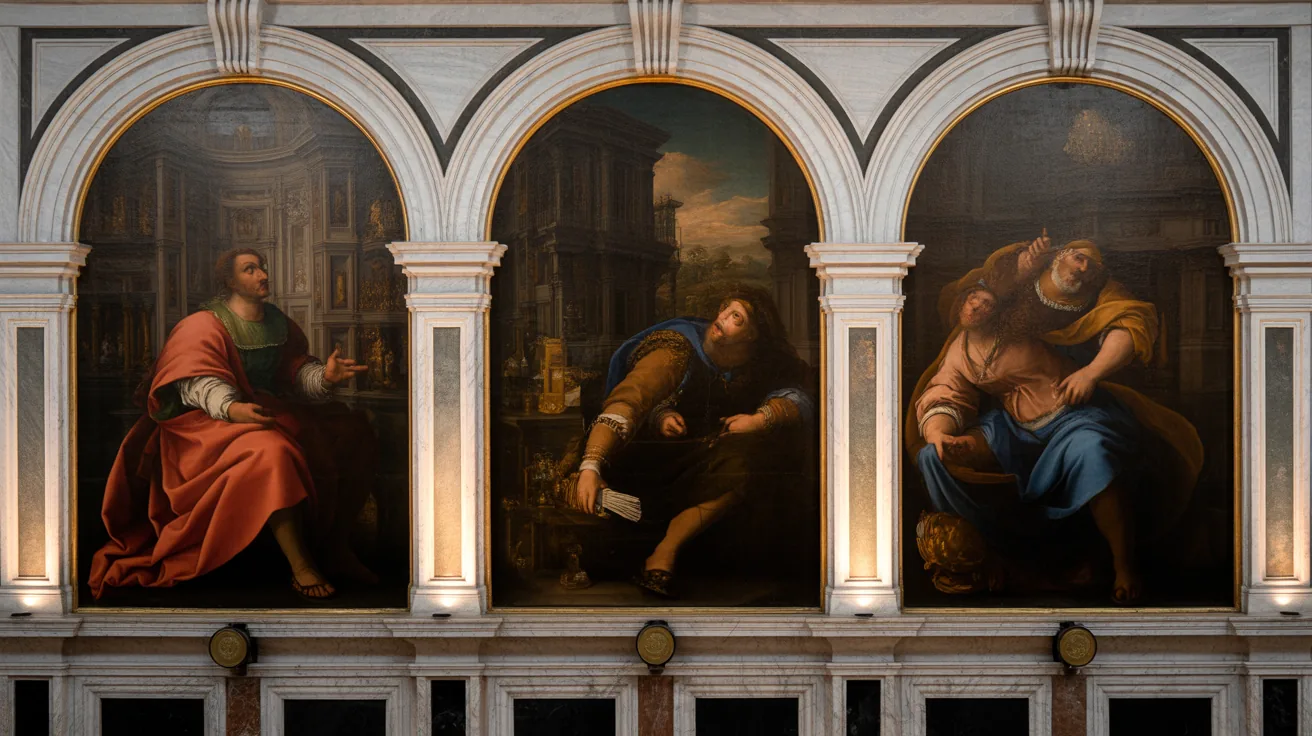
Rome’s churches hold more masterpieces than most national galleries and almost all of them are free. San Luigi dei Francesi holds three Caravaggios in a single chapel, lit by a coin operated light that costs almost nothing. Santa Maria del Popolo has two more alongside a Raphael chapel, and it sits on a major square most visitors walk past without going in. Santa Maria in Trastevere has twelfth century mosaics that glow when the lights come on, and San Clemente stacks several centuries of building on top of each other, though the lower levels there are ticketed.
Practically every one of them is open during the day, costs nothing, and requires no booking. The only condition is the dress code, which applies to churches generally in Rome and is enforced strictly at the major ones.
St Peter’s Basilica is free to enter, though the queue for security is long and the dress code is enforced. The Vatican Museums publish their own ticket arrangements separately, and unlike the basilica they are ticketed except on specific free days.
| Area | Free things worth doing |
|---|---|
| Centro Storico | Pantheon, Piazza Navona, Trevi Fountain, Spanish Steps |
| Near the Forum | Capitoline Hill views, Via dei Fori Imperiali, Palatine exterior |
| Trastevere | Santa Maria in Trastevere, Janiculum Hill view, evening streets |
| Vatican area | St Peter’s Basilica, St Peter’s Square, Castel Sant’Angelo bridge |
| Aventine | Orange Garden, the Knights of Malta keyhole, Santa Sabina |
| Testaccio | Non-Catholic Cemetery, the market, Monte Testaccio exterior |
Views That Cost Nothing
Rome sits on hills, which is why it has so many free viewpoints. None of them charges admission and none of them requires booking.
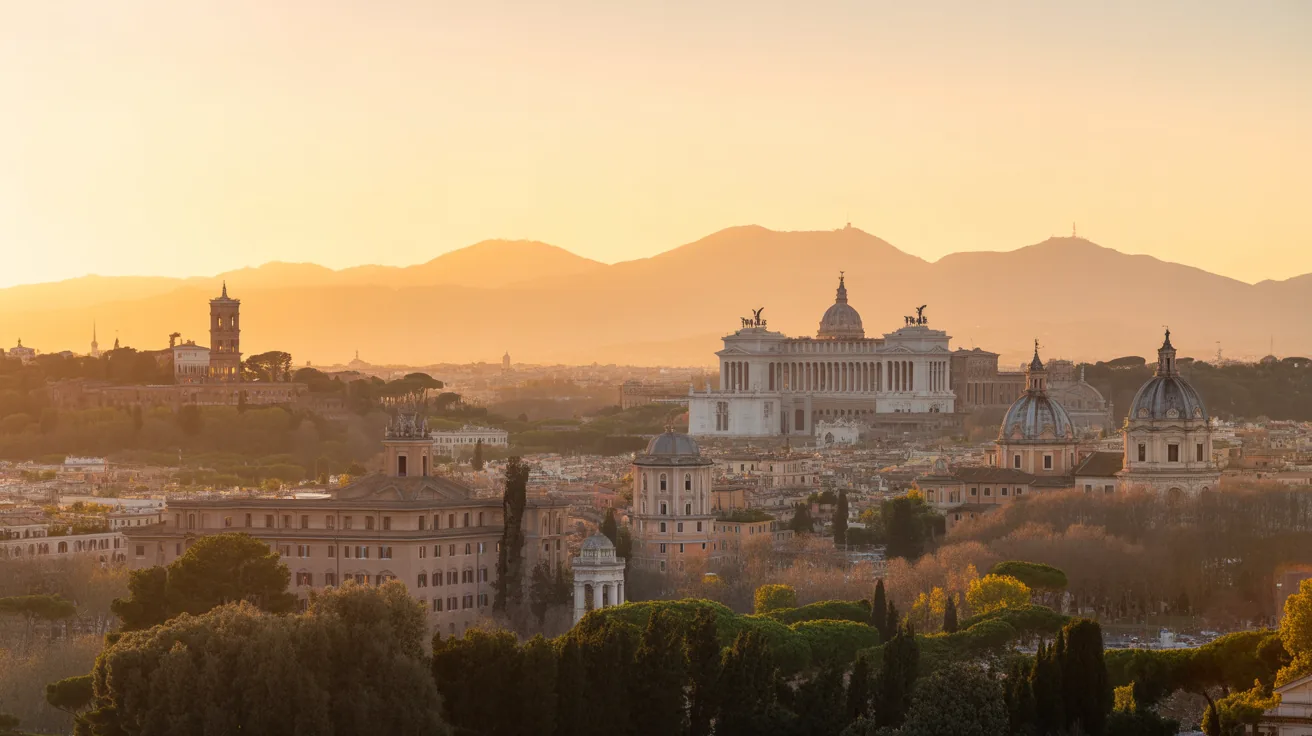
The Janiculum Hill gives you the best panorama in Rome and charges nothing for it. It is a walk uphill from Trastevere and worth the climb at the end of an afternoon. The Orange Garden on the Aventine is quieter and arguably prettier, and a few steps away the keyhole in the Knights of Malta door frames St Peter’s dome perfectly, which is the most photographed free thing in the city.
The Spanish Steps and the terrace above them give you another, and the Vittoriano’s outdoor terraces are free even though the lift to the very top is not.
Pincio Terrace above Piazza del Popolo is the sunset option, and the steps of the Capitoline give you the Forum from above without a ticket. None of these require booking, queueing or planning beyond turning up.
🔢 Quick Numbers
- Over 2,500 public drinking fountains, the nasoni, run continuously across Rome and provide free potable water
- Zero admission is charged at St Peter’s Basilica or at almost any church in the city, including several holding Caravaggio paintings
- 3 days is enough to see Rome’s outdoor and church highlights without paying an entry fee once
Water, Which Is Free and Everywhere
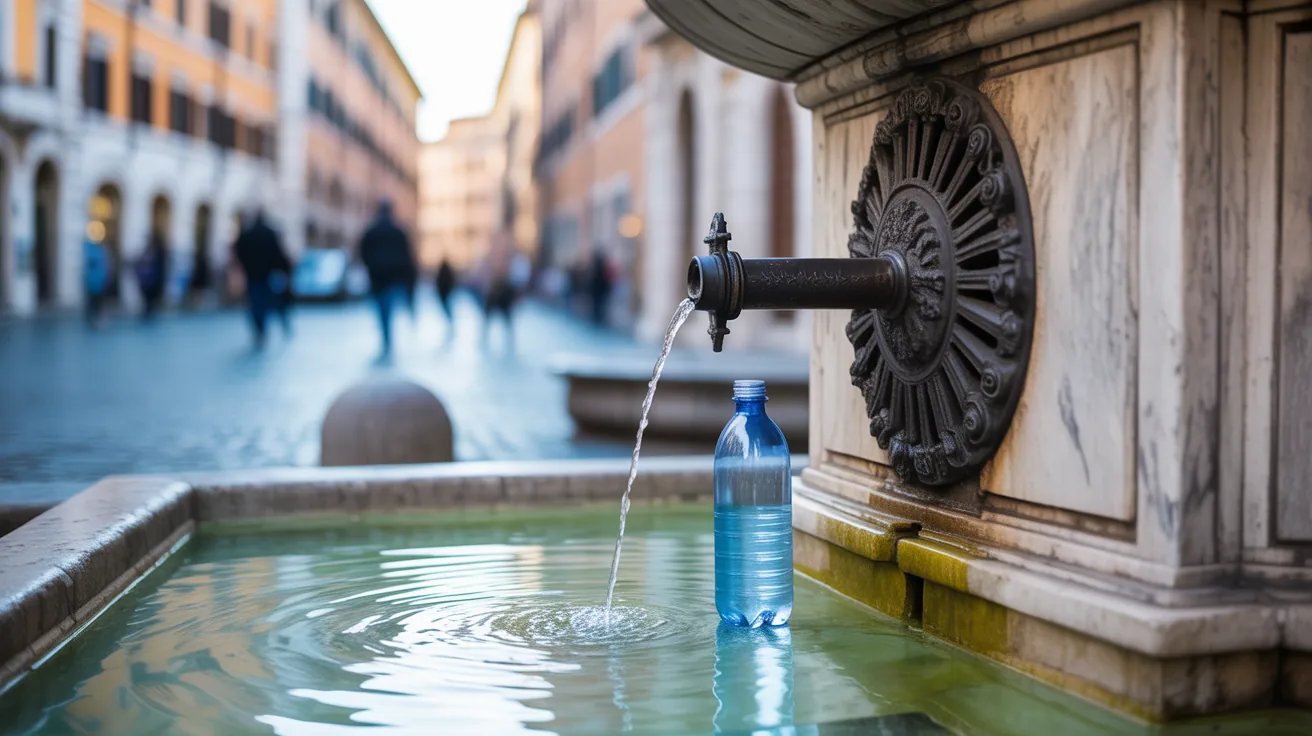
Rome’s nasoni are cast iron fountains that run continuously with drinkable water drawn from the same supply that serves homes. They have been part of the city since the 1870s and there are more than 2,500 of them, so a reusable bottle removes the single most common small expense a visitor has in summer.
The distinction to keep in mind is between a fontanella, the small drinking fountain, and a fontana, the monumental kind. The Trevi Fountain recirculates its water and is not for drinking, but there are nasoni beside it that are.
💡 Pro Tip
Walk Rome at seven in the morning at least once. The Trevi Fountain, the Pantheon exterior and Piazza Navona are free at any hour and almost empty at that one, and the light is better than at any other time of day. It costs nothing, it removes the crowd problem entirely, and it is the thing visitors most often say they wish they had done more of.
Ruins and Streets You Can See Without a Ticket
A surprising amount of ancient Rome sits in the open, unfenced and unticketed, because the city was built on top of itself rather than around a museum.
The Roman Forum requires a ticket, but you can see a great deal of it for free from Via dei Fori Imperiali and from the terrace beside the Capitoline. The Theatre of Marcellus, the Largo di Torre Argentina cat sanctuary, the Aurelian Walls and the Portico of Octavia all sit in the open street where anyone can look at them.
Piazza Navona, the Spanish Steps, the Trevi Fountain and the exterior of the Pantheon are all free at any hour, and the Pantheon itself became ticketed only recently after centuries of free entry. Seeing them early costs nothing and avoids the crowds, which is the sort of adjustment that improves a trip more than any ticket.
The Appian Way is free to walk and closed to most traffic on Sundays, which makes it one of the better half days in Rome for anyone happy to travel out a little. Combining it with a properly planned day rather than a squeezed afternoon is what makes it work.
Free Days and What They Cost You in Queues
Italian state museums, including the Colosseum and the Borghese, are free to everyone on the first Sunday of each month. The Vatican Museums have their own free day on the last Sunday of the month, which is a separate arrangement with a separate queue.
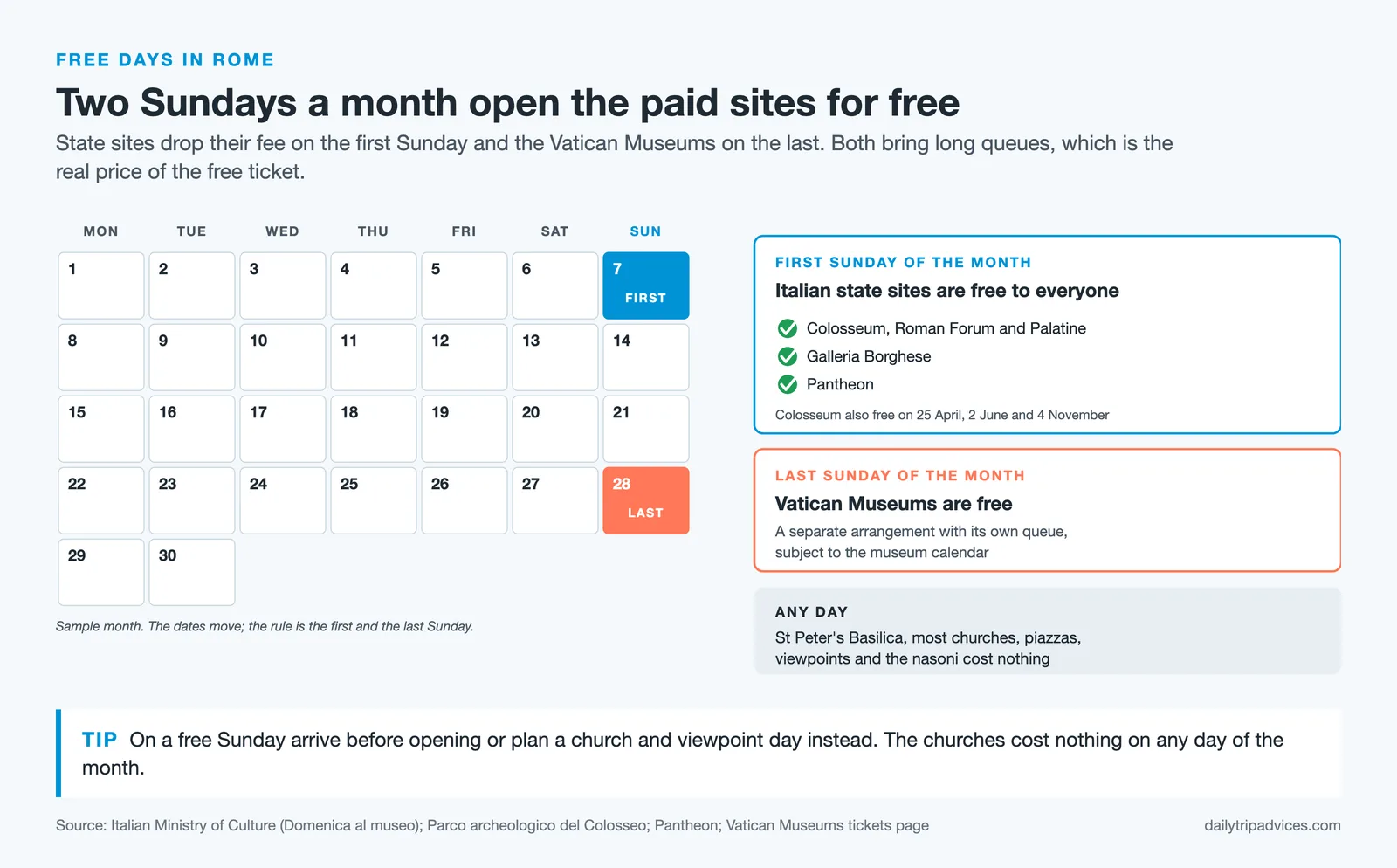
The Pantheon is worth a note here because it changed. It was free for centuries and now charges admission, which catches returning visitors who remember walking straight in.
Free days are worth understanding rather than chasing, because the price of admission is replaced by a price in hours.
Both are genuinely free and both involve queues long enough that many visitors decide the ticket was worth it. If your trip includes one of those Sundays, plan to arrive very early or to do something else entirely, and treat the extra planning as part of the cost. Non-EU arrivals are now registered biometrically on first entry to Schengen, so allow additional time on arrival day as well, and travellers connecting through a large hub should factor in that leg too.
Free admission days, opening hours and church access rules change, and some churches close for services. Check before planning a day around a specific site.
What This Means for Your Next Trip
The reframe worth taking from this is that Rome’s ticketed sites are the exception rather than the rule. Two of them, the Colosseum and the Vatican Museums, genuinely deserve the money and the planning. Almost everything else that makes the city remarkable is standing in the street or sitting in a church with the door open, and a visitor who understands that arrives with a much better trip and a much smaller bill.

Leave a Comment